

Structural Safety
Let us understand how we can help you
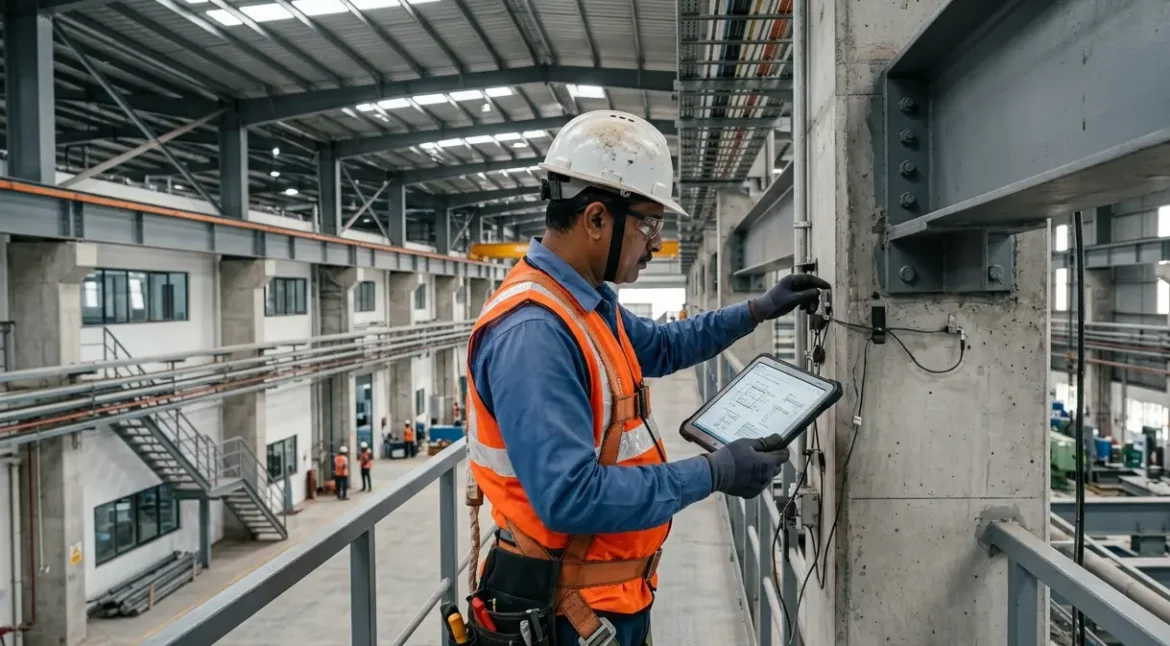
Earthquakes can cause significant structural damage, operational disruption, and safety risks, particularly in buildings that were designed before the implementation of modern seismic design standards. Understanding how a structure is likely to perform during seismic events is essential for protecting people, assets, and business continuity.
Indsafe provides Seismic Vulnerability Assessment Services in India to evaluate the earthquake resistance of industrial facilities, commercial buildings, warehouses, infrastructure, and institutional structures. Our assessments identify structural weaknesses, evaluate compliance with applicable seismic design standards, and recommend practical strengthening measures to improve structural resilience.
Using engineering analysis, site inspections, and applicable Indian Standards, we help organizations understand their seismic risks and make informed decisions to enhance structural safety.
What is a Seismic Vulnerability Assessment?
A Seismic Vulnerability Assessment is an engineering evaluation conducted to determine how a building or structure is likely to perform during an earthquake.
The assessment identifies structural deficiencies, evaluates the ability of the structure to resist seismic forces, and determines whether strengthening or retrofitting measures are required.
It is particularly important for ageing structures, industrial facilities, and buildings located in earthquake-prone regions or those constructed before current seismic design codes came into effect.
Why is Seismic Vulnerability Assessment Important?
Many existing buildings were designed using earlier construction practices and may not satisfy current earthquake-resistant design requirements.
A professional seismic assessment helps organizations:
- Identify structural vulnerabilities before an earthquake occurs.
- Improve life safety for occupants.
- Reduce the risk of structural collapse.
- Support business continuity.
- Protect critical equipment and infrastructure.
- Prioritize retrofitting investments.
- Improve compliance with applicable seismic design standards.
Understanding seismic performance allows organizations to plan improvements before an emergency rather than reacting after a disaster.
Our Scope of Work
Our Seismic Vulnerability Assessment follows a structured engineering methodology to evaluate structural performance under earthquake loading.
1. Rapid Visual Screening (RVS)
Our engineers conduct a Rapid Visual Screening (RVS) to identify buildings that may have significant seismic vulnerabilities.
The screening includes:
- Structural configuration
- Visible deterioration
- Building irregularities
- Construction type
- General structural condition
RVS helps determine whether detailed seismic evaluation is required.
2. Detailed Seismic Evaluation
Where required, a comprehensive engineering assessment is performed, including:
- Structural framing evaluation
- Plan irregularities
- Vertical irregularities
- Structural continuity
- Member adequacy
- Load path assessment
This evaluation provides a detailed understanding of the structure’s seismic behaviour.
3. Lateral Load-Resisting System Assessment
Our engineers assess whether the existing lateral load-resisting system is adequate for the applicable seismic zone.
The assessment considers:
- Structural stiffness
- Structural ductility
- Load transfer mechanisms
- Bracing systems
- Shear walls
- Moment-resisting frames
4. Identification of Seismic Vulnerabilities
We identify common structural deficiencies, including:
- Soft-storey conditions
- Short-column effects
- Torsional irregularities
- Vertical discontinuities
- Weak structural members
- Inadequate lateral resistance
- Poor load paths
These vulnerabilities can significantly influence structural performance during an earthquake.
5. Engineering Recommendations
Based on the assessment findings, practical engineering recommendations may include:
- Structural strengthening
- Seismic retrofitting
- Member strengthening
- Bracing improvements
- Foundation strengthening
- Structural modifications
- Additional engineering investigations
Recommendations are prioritized based on structural risk and operational requirements.
Our Assessment Methodology
Step 1 – Collection of Engineering Information
Review of structural drawings, design reports, previous assessments, and available engineering documentation.
Step 2 – Site Inspection
Detailed inspection of structural components, configuration, and visible structural distress.
Step 3 – Seismic Evaluation
Assessment of the structure’s ability to resist earthquake-induced forces based on applicable engineering principles.
Step 4 – Risk Assessment
Evaluation of structural vulnerabilities and their potential impact on life safety and operations.
Step 5 – Engineering Recommendations
Preparation of practical recommendations for retrofitting, strengthening, monitoring, or further investigations.
Step 6 – Technical Report
Submission of a comprehensive report containing:
- Inspection findings
- Structural observations
- Seismic evaluation
- Identified vulnerabilities
- Risk assessment
- Engineering recommendations
Applicable Standards & Guidelines
Our Seismic Vulnerability Assessments are carried out in accordance with relevant engineering standards, including:
- IS 1893 – Criteria for Earthquake Resistant Design of Structures
- IS 13935 – Seismic Evaluation, Repair and Strengthening of Buildings
- IS 4326 – Earthquake Resistant Design and Construction of Buildings
- IS 13920:2016 – Ductile Design and Detailing of Reinforced Concrete Structures
- IS 13828 – Guidelines for Improving Earthquake Resistance of Low-Strength Masonry Buildings
- National Building Code (NBC) of India
Industries We Serve
Our Seismic Vulnerability Assessment Services support:
- Manufacturing Facilities
- Chemical & Petrochemical Plants
- Pharmaceutical Industries
- Warehouses & Logistics Centres
- Commercial Buildings
- Hospitals
- Educational Institutions
- Infrastructure Projects
- Power & Energy Facilities
- High-Rise Buildings
- Industrial Processing Plants
Why Choose Indsafe?
Experienced Structural Engineers
Assessments performed by qualified structural engineering professionals with industrial experience.
Standards-Based Evaluation
Engineering assessments aligned with applicable Indian seismic design standards.
Practical Retrofitting Recommendations
Recommendations focused on improving structural resilience while considering operational requirements.
Comprehensive Risk Assessment
Combining structural evaluation, engineering analysis, and practical risk mitigation strategies.
Pan-India Engineering Support
Supporting industrial and commercial clients across India.
Frequently Asked Questions
Ageing buildings, industrial facilities, hospitals, schools, commercial buildings, and structures located in moderate or high seismic zones should be periodically evaluated.
Yes. Where structural deficiencies are identified, practical recommendations for strengthening or retrofitting are provided.
It is recommended, particularly for facilities with ageing infrastructure, critical operations, hazardous processes, or significant occupancy.
Yes. A seismic assessment helps determine whether existing structures can safely accommodate proposed modifications or increased loading.
Get in Touch
Improve the earthquake resilience of your facilities with Indsafe’s Seismic Vulnerability Assessment Services. Our experienced structural engineers help organizations identify seismic risks, evaluate structural performance, and recommend practical measures to enhance safety, compliance, and long-term operational reliability.