Compliance Services
Let us understand how we can help you
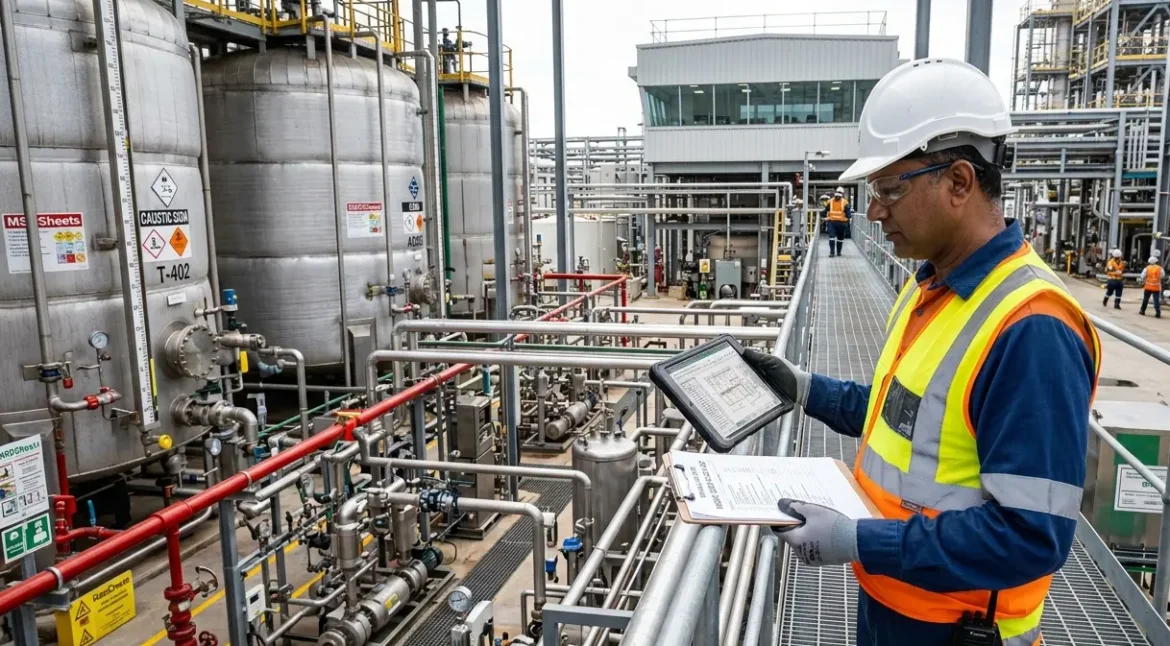
Assess hazardous chemical compliance, evaluate major accident hazards and strengthen industrial safety systems.
Organizations manufacturing, storing, handling or importing hazardous chemicals may be subject to specific requirements under the Manufacture, Storage and Import of Hazardous Chemicals (MSIHC) Rules, 1989. The applicable obligations depend on the chemicals involved, quantities, activities and relevant provisions of the Rules.
INDSAFE provides MSIHC audit and hazardous chemical compliance support to help industrial organizations assess applicable requirements, review safety documentation, identify gaps and plan corrective actions.
Our approach combines regulatory compliance review with practical process safety considerations to support safer chemical handling, improved emergency preparedness and effective management of major accident hazards.
What Is MSIHC Compliance?
The Manufacture, Storage and Import of Hazardous Chemicals Rules, 1989, were notified under the Environment (Protection) Act, 1986. They establish requirements concerning specified hazardous chemicals and industrial activities, including relevant manufacturing, storage, handling and import activities.
MSIHC compliance involves determining which provisions apply to a facility based on the chemicals involved, their quantities, the nature of the industrial activity and the relevant requirements of the Rules.
Depending on applicability, obligations may include site notification, preparation and updating of Safety Reports, independent safety audits, On-Site Emergency Plans, accident reporting, public information and other prescribed documentation.
An MSIHC audit or compliance assessment helps evaluate the applicable requirements, review the implementation of safety measures and identify gaps that may require corrective action.
Who Do the MSIHC Rules Apply To?
The MSIHC Rules, 1989, may apply to industrial activities and facilities involving hazardous chemicals covered by the relevant provisions, including:
Industrial activities involving specified hazardous chemicals: Activities involving chemicals that meet the criteria or listings specified under the applicable parts of Schedule 1.
Isolated storage facilities: Storage of hazardous chemicals covered under Schedule 2 where the relevant threshold quantities and provisions apply.
Import of hazardous chemicals: Import activities involving chemicals covered under Schedule 3 and the associated notification and information requirements.
Major Accident Hazard (MAH) installations: Facilities meeting the applicable criteria and threshold quantities for major accident hazard installations.
Chemical manufacturing, processing and storage operations: Facilities whose activities fall within the scope of the relevant MSIHC provisions.
The exact obligations depend on the applicable schedules, thresholds, exclusions and other conditions in the Rules. A chemical-handling facility should not assume that every MSIHC requirement applies to it or that it is exempt without a facility-specific assessment.
Scope of an MSIHC Safety Audit
The scope of an MSIHC safety audit is defined according to the facility’s hazardous chemical inventory, operations, applicable regulatory requirements and audit objectives. The assessment may cover the following areas, depending on the agreed scope.
Hazardous Chemical Inventory and Regulatory Applicability
Review of hazardous chemicals manufactured, processed, stored, handled or imported.
Assessment of chemical identities, quantities and relevant inventory records.
Review of applicable schedules and prescribed threshold quantities.
Identification of potentially applicable MSIHC obligations.
Review of relevant site notifications and regulatory submissions.
Major Accident Hazard Identification and Risk Assessment
Review of credible major accident scenarios involving hazardous chemicals.
Assessment of potential toxic releases, fires, explosions and other relevant events.
Review of hazard identification and risk assessment documentation.
Evaluation of preventive and mitigative measures.
Review of recommendations from previous risk assessments and their implementation status.
Safety Reports and Safety Audit Reports
Review of applicable Safety Reports and supporting technical documentation.
Assessment of documented major accident hazards and risk-control measures.
Review of previous Safety Audit Reports and identified findings.
Assessment of whether documented safety arrangements reflect actual site conditions.
Review of corrective action tracking and applicable reporting requirements.
Chemical Storage, Handling and Transfer
Assessment of chemical storage facilities, tank farms, warehouses, drums and cylinders.
Review of chemical segregation and compatibility practices.
Assessment of chemical transfer systems and relevant containment arrangements.
Review of labelling and hazard communication practices.
Evaluation of spill prevention and response arrangements.
Process Safety and Operating Controls
Review of operating procedures for relevant hazardous chemical activities.
Assessment of controls for abnormal operating conditions.
Review of relevant equipment safeguards and protective systems.
Assessment of maintenance, inspection and testing records within the agreed scope.
Review of management-of-change practices where relevant to major accident prevention.
Emergency Preparedness and Response
Review of applicable On-Site Emergency Plans.
Assessment of emergency response organization and responsibilities.
Review of emergency communication and evacuation arrangements.
Assessment of emergency equipment, training and drill records.
Review of coordination arrangements with relevant external authorities, where applicable.
Training and Competency
Review of employee awareness of hazardous chemical risks.
Assessment of relevant operating and emergency response training.
Review of contractor safety arrangements.
Evaluation of competency records for personnel involved in hazardous chemical activities.
Accident Reporting and Corrective Actions
Review of relevant incident and near-miss records.
Assessment of applicable major accident reporting arrangements.
Review of incident investigation findings and preventive measures.
Evaluation of corrective action tracking and closure.
Identification of opportunities for improving process safety performance.
The final audit checklist and coverage are determined by the applicable regulatory provisions, relevant guidance, facility-specific hazards and the agreed scope. Specialist testing, detailed engineering assessments or quantitative risk studies may require separate work packages.
Key Compliance Obligations Under MSIHC Rules
Depending on the industrial activity and applicable provisions, organizations may need to address the following requirements.
Notification of Site
Review of applicable site notification requirements and the information to be submitted to the concerned authority when an industrial activity commences or relevant changes occur. The applicable notification criteria and timelines should be verified for the facility.
Safety Data Sheets (SDS)
Review of relevant Safety Data Sheets containing information on chemical hazards, physical and chemical properties, safe handling, storage, exposure controls and emergency response. The specific documentation and information requirements depend on the chemicals and applicable provisions.
Safety Report
Assessment of the preparation and updating of Safety Reports for industrial activities covered by the relevant requirements. These reports address major accident hazards, potential consequences and the measures adopted to prevent and mitigate accidents.
Safety Audit Report
Review of applicable independent safety-audit requirements, Safety Audit Reports, findings and corrective actions. The relevant statutory requirements may prescribe specific audit intervals, submission arrangements and eligibility criteria for the auditor or agency.
On-Site Emergency Plan
Assessment of the preparation, implementation and updating of applicable On-Site Emergency Plans. The review may cover emergency responsibilities, response procedures, communication arrangements and measures for managing major accidents within the facility.
Off-Site Emergency Plan
Review of the facility’s relevant interface and coordination arrangements with the authorities responsible for off-site emergency planning. Preparation and administration of the off-site plan fall within the responsibilities assigned to the designated authorities under the applicable framework.
Information to the Public
Review of applicable requirements for providing major accident hazard information to people who may be affected, including relevant information about potential hazards and appropriate safety measures.
Accident Reporting
Assessment of the applicable procedures for reporting major accidents involving hazardous chemicals, investigating incidents and documenting corrective and preventive measures.
These obligations should be assessed individually against the applicable MSIHC provisions rather than treated as a universal checklist of mandatory requirements for every facility.
Our MSIHC Audit Methodology

1. Applicability Screening
Review of chemical inventories, relevant schedules, threshold quantities and industrial activities to establish which MSIHC provisions may apply.
2. Compliance Gap Assessment
Examination of available documentation, records and existing compliance arrangements against the applicable regulatory requirements and agreed audit criteria.
3. Safety Data Sheet Review and Support
Review of available Safety Data Sheets for relevant hazardous chemicals and identification of gaps in chemical hazard information. Preparation or updating of SDS documentation may be included where separately agreed and appropriately supported.
4. Safety Report and Safety Audit Report Review
Review of applicable Safety Reports, previous Safety Audit Reports, supporting risk assessments and documented corrective actions. Preparation or statutory independent auditing is undertaken only where the agreed scope and applicable competence or approval requirements permit.
5. On-Site Emergency Plan Review
Assessment of the applicable On-Site Emergency Plan, emergency roles, response procedures, communication arrangements and implementation records.
6. Off-Site Emergency Planning Support
Review of relevant interfaces and coordination arrangements with the concerned authorities responsible for off-site emergency planning, where applicable.
7. Storage and Handling Compliance Verification
Assessment of chemical storage, handling, segregation, compatibility, labelling, hazard communication and relevant chemical management practices.
8. Final Compliance Report
Preparation of a report documenting the assessment scope, identified gaps, observations and recommendations. Where agreed, corrective actions can be prioritized to help the organization plan implementation and monitor closure.
Our MSIHC Audit and Compliance Services
INDSAFE’s services can be tailored to the facility’s operations, applicable obligations and agreed technical scope.
Regulatory Compliance Review
Assessment of applicable MSIHC requirements, existing compliance arrangements and documentation to identify potential gaps and areas requiring further attention.
Hazardous Chemical Inventory Assessment
Review of hazardous chemical inventories, relevant quantities and applicable threshold criteria to support regulatory applicability screening.
Major Accident Hazard (MAH) Evaluation
Review of relevant major accident hazard criteria, facility information and available risk assessments to identify potentially applicable obligations and areas requiring further evaluation.
Documentation Review
Review of relevant documentation, which may include:
Safety Reports.
Safety Audit Reports.
Material Safety Data Sheets (MSDS) and Safety Data Sheets (SDS).
On-Site Emergency Plans.
Incident and investigation records.
Training and competency records.
Regulatory notifications and submissions.
Operating procedures and safety documentation.
The documents reviewed depend on the facility, applicable requirements and agreed scope.
Storage and Handling Assessment
Review of chemical storage and handling arrangements, including:
Chemical storage facilities.
Tank farms and warehouses.
Drum and cylinder storage areas.
Chemical transfer systems.
Chemical segregation and compatibility practices.
Labelling and hazard communication systems.
Emergency Preparedness Review
Assessment of relevant emergency planning and response arrangements, including:
On-Site Emergency Plan implementation.
Emergency response organization and responsibilities.
Emergency drills and associated records.
Emergency equipment availability.
Communication systems.
Mutual aid and external coordination arrangements, where applicable.
Training and Competency Assessment
Review of employee awareness, relevant training, contractor safety arrangements and competency documentation associated with hazardous chemical handling and emergency response.
Compliance Gap Analysis
Identification of potential non-compliances, documentation gaps and improvement opportunities, with practical recommendations to support corrective action planning and stronger process safety performance.
Industries We Support
Our MSIHC audit and hazardous chemical compliance support can be tailored to:
Pharmaceutical Industries – hazardous chemical storage, handling and process operations.
Chemical Manufacturing Facilities – chemical production, processing and associated storage.
Petrochemical Plants – hazardous inventories, process operations and major accident hazards.
Agrochemical and Fertilizer Industries – relevant chemical manufacturing, handling and storage activities.
Oil and Gas Facilities – applicable hazardous chemical storage and process activities.
Paints, Coatings and Adhesives Industries – solvent, chemical and raw-material handling operations.
FMCG Manufacturing Facilities – relevant chemical storage and use where the Rules apply.
Bulk Chemical Storage Facilities – applicable isolated storage and associated hazardous chemical operations.
The applicability of MSIHC requirements must be established for each facility; industry classification alone does not determine statutory obligations.
Why MSIHC Compliance Matters
A structured approach to hazardous chemical compliance can help organizations:
Improve understanding of applicable MSIHC requirements.
Strengthen preparedness for major accident scenarios.
Identify documentation and implementation gaps before regulatory reviews.
Improve hazardous chemical storage and handling practices.
Review and strengthen emergency response arrangements.
Address operational and regulatory risk exposure.
Support protection of employees, surrounding communities and the environment.
Improve process safety management and continual improvement.
Why Choose INDSAFE?
Specialized Regulatory Understanding
A structured approach to interpreting applicable MSIHC requirements and assessing hazardous chemical compliance obligations.
Focus on Hazardous Chemical Risks
Assessment of relevant major accident scenarios, hazardous chemical management practices and preventive and mitigative measures within the agreed scope.
Documentation and Compliance Support
Support for reviewing Safety Reports, Safety Audit Reports, SDS documentation and emergency planning records, subject to the scope and applicable requirements.
Practical and Implementable Recommendations
Findings and recommendations designed to help organizations prioritize corrective actions and improve implementation.
Integrated Process Safety Approach
Consideration of hazardous chemical compliance alongside broader process safety management and risk assessment objectives.
Multidisciplinary Technical Perspective
A scope that can draw on relevant process safety, risk assessment and emergency planning expertise, according to the assignment and available team qualifications.
Industry-Specific Assessment
An assessment tailored to the facility’s operations, chemical inventory, applicable regulatory provisions and agreed objectives.
Frequently Asked Questions
What is an MSIHC audit?
An MSIHC audit assesses relevant hazardous chemical safety arrangements and compliance with applicable provisions of the Manufacture, Storage and Import of Hazardous Chemicals Rules, 1989. The scope depends on the facility, chemicals, quantities and relevant statutory requirements.
Which facilities are covered by MSIHC Rules?
The Rules cover specified hazardous chemicals and industrial activities, including certain industrial activities, isolated storage facilities and import activities. The relevant schedules, threshold quantities and other conditions determine applicability.
How often is an MSIHC safety audit required?
The applicable provisions and circumstances determine the statutory audit requirements. Rule 10 includes specific requirements concerning Safety Reports and safety audits for applicable industrial activities. The relevant audit interval and submission requirements should be verified against the current Rules and applicable guidance.
What is included in the scope of an MSIHC safety audit?
Depending on applicability and the agreed scope, the assessment may cover chemical inventory, major accident hazards, Safety Reports, safety-audit documentation, storage and handling, emergency preparedness, training, incident records and corrective actions.
What is the difference between an MSIHC audit and an IS 14489 audit?
The MSIHC Rules establish requirements concerning specified hazardous chemicals and applicable industrial activities. IS 14489:2018 provides a code of practice for occupational health and safety audits. Government guidance refers to IS 14489 in the context of safety audits for certain MSIHC-covered facilities. The applicable scope and auditor eligibility requirements must be confirmed for the specific assignment.
Are MSIHC audits connected with DISH?
DISH refers to a state Directorate of Industrial Safety and Health. The responsibilities of the relevant state authority and the applicable audit or submission requirements depend on the facility and legal framework.
Does DGFASLI approve every MSIHC audit agency?
No general claim of approval should be assumed. Applicable eligibility, accreditation or approval requirements must be checked against the relevant provisions and guidance for the specific statutory audit.
Does an MSIHC audit guarantee complete regulatory compliance?
No. An audit evaluates evidence and conditions within a defined scope. Compliance also depends on the applicability of legal requirements, actual implementation of controls and closure of identified gaps. An audit report is not automatically a guarantee of complete legal compliance.
Related Services
Get in Touch
Looking to assess hazardous chemical compliance, review safety documentation or identify gaps in your facility’s major accident prevention arrangements?
Contact INDSAFE to discuss your facility, applicable requirements and the scope of technical support needed.