
Structural Safety
Let us understand how we can help you
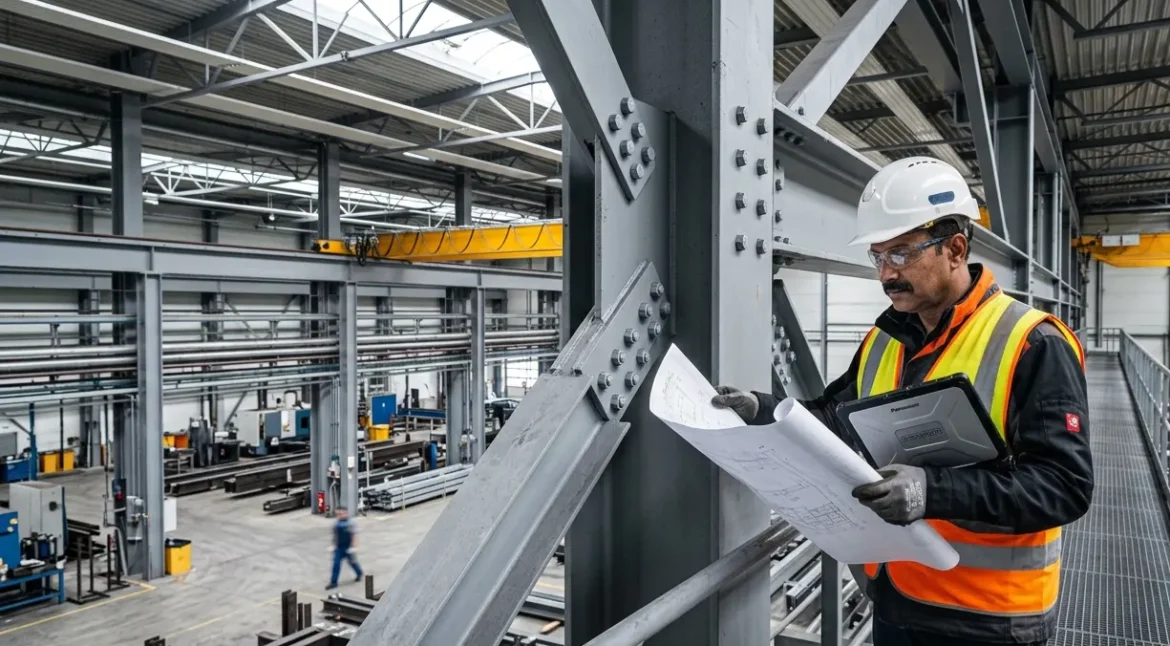
Industrial structures are exposed to ageing, environmental conditions, increased operational loads, corrosion, vibration, equipment modifications, and accidental events throughout their service life. Over time, these factors can affect structural integrity, making periodic engineering assessments essential for ensuring continued safety and reliability.
Indsafe provides Structural Audit & Condition Assessment Services in India to help industries, commercial facilities, institutions, and infrastructure projects evaluate the current condition of their structures, identify deterioration at an early stage, and recommend practical engineering solutions before defects develop into major structural failures.
Our audits combine detailed site inspections, engineering expertise, applicable Indian Standards, and professional judgement to help organizations improve structural reliability, plan maintenance activities, support statutory compliance, and extend the service life of critical assets.
What is a Structural Audit?
A Structural Audit is a systematic engineering assessment carried out to determine the present condition, structural integrity, and serviceability of an existing building or industrial structure.
It serves as a preventive health check for structures by identifying visible distress, evaluating possible causes of deterioration, and determining whether repairs, strengthening, rehabilitation, or further investigations are required.
Whether it is an ageing manufacturing facility, warehouse, commercial building, institutional campus, or process plant, a structural audit provides valuable engineering insights that support informed maintenance and safety decisions.
Why Structural Audit & Condition Assessment is Important
Structural deterioration often develops gradually and may not be immediately visible. Factors such as ageing, corrosion, increased loading, foundation settlement, environmental exposure, poor maintenance, vibration, and structural modifications can reduce the safety and reliability of a structure over time.
A professional structural audit helps organizations:
- Identify hidden structural deficiencies before they become critical.
- Improve the safety of personnel and assets.
- Reduce unexpected repair costs and operational downtime.
- Support preventive maintenance planning.
- Extend the service life of existing structures.
- Meet statutory, insurance, and regulatory requirements.
- Support renovation, expansion, redevelopment, or change-of-use projects.
Regular structural assessments enable organizations to make informed engineering decisions while minimizing operational and safety risks.
Scope of Work – What We Do
Our Structural Audit & Condition Assessment follows a structured engineering methodology designed to evaluate the condition of existing structures and identify areas requiring corrective action.
1. Detailed Visual Inspection
Our engineers conduct a comprehensive visual inspection of structural components, including:
- Beams
- Columns
- Slabs
- Walls
- Foundations
- Steel structures
- Roof structures
- Staircases
- Industrial platforms
- Pipe racks
- Other load-bearing structural elements
The inspection helps identify visible signs of deterioration, distress, deformation, or damage affecting structural performance.
2. Identification & Mapping of Structural Distress
During the audit, our engineers identify, document, and map various structural defects, including:
- Structural cracks
- Concrete spalling
- Reinforcement corrosion
- Steel corrosion
- Dampness
- Water leakage
- Foundation settlement
- Surface deterioration
- Honeycombing
- Deflection
- Structural displacement
- Material degradation
Each observation is recorded with its location and engineering assessment to facilitate future monitoring and repair planning.
3. Review of Engineering Documentation
Where available, our engineers review:
- Structural drawings
- Design basis and design calculations
- Previous repair records
- Maintenance history
- Renovation and modification records
- Construction documentation
This review helps verify whether the structure continues to perform within its intended design parameters.
4. Photographic Documentation
All significant observations are supported by detailed photographic documentation with location references, creating a comprehensive visual record of the structure’s condition for engineering evaluation and future comparison.
5. Preliminary Structural Health Assessment
Based on inspection findings, our engineers provide a preliminary assessment of:
- Overall structural condition
- Nature and extent of deterioration
- Possible causes of distress
- Structural adequacy
- Urgency of corrective action
- Potential safety implications
This assessment forms the basis for determining the next course of engineering action.
6. Post-Fire & Post-Incident Structural Assessment
Where applicable, Indsafe conducts structural assessments following incidents such as:
- Fire
- Explosion
- Equipment impact
- Chemical exposure
- Flooding
- Natural disasters
- Other abnormal events
These assessments help determine whether the structure remains safe for continued operation or requires repair, strengthening, or replacement.
7. Pre-Redevelopment Condition Survey
Before renovation, redevelopment, expansion, or major structural modifications, we carry out condition surveys of the existing structure and adjoining structures where required.
This helps establish baseline structural conditions and identify potential risks associated with construction activities.
8. Recommendations for Further Investigation
Where visual observations indicate possible structural deficiencies, we recommend appropriate engineering investigations, including:
- Non-Destructive Testing (NDT)
- Structural Load Assessment
- Foundation Investigation
- Material Testing
- STAAD Structural Analysis
- Structural Stability Assessment
This ensures engineering decisions are supported by objective technical data rather than visual observations alone.
Our Structural Audit Methodology
Our structured audit methodology includes:
Step 1 – Collection of Engineering Information
Review of available structural drawings, design reports, maintenance records, previous inspection reports, and repair history.
Step 2 – Detailed Site Inspection
Comprehensive inspection of structural components to identify visible defects, deterioration, deformation, corrosion, leakage, settlement, and other signs of distress.
Step 3 – Structural Condition Assessment
Engineering evaluation of structural performance, severity of deterioration, and probable causes affecting structural integrity.
Step 4 – Engineering Evaluation
Assessment of structural adequacy, associated risks, and the urgency of corrective measures based on engineering judgement and applicable standards.
Step 5 – Recommendations
Preparation of practical recommendations covering:
- Repairs
- Strengthening
- Rehabilitation
- Monitoring
- Further investigations
- Maintenance planning
Step 6 – Structural Audit Report
Submission of a comprehensive Structural Audit Report containing:
- Inspection findings
- Engineering observations
- Photographic evidence
- Structural assessment
- Risk observations
- Recommended corrective actions
- Suggested future investigations
Applicable Standards & Guidelines
Our structural audits are conducted in accordance with applicable engineering standards and industry guidelines, including:
- IS 456:2000 – Plain and Reinforced Concrete
- IS 800:2007 – General Construction in Steel
- National Building Code (NBC) of India
- IAStructE Guidelines
- Other relevant Indian Standards applicable to the project
Industries We Serve
Our Structural Audit & Condition Assessment Services support a wide range of industries, including:
- Manufacturing Facilities
- Chemical & Petrochemical Plants
- Pharmaceutical Industries
- Food & Beverage Facilities
- Warehouses & Logistics Parks
- Commercial Buildings
- Educational Institutions
- Hospitals
- Infrastructure Projects
- Power & Energy Facilities
- Residential & High-Rise Buildings
- Industrial Plants
Why Choose Indsafe?
Experienced Structural Engineering Team
Our multidisciplinary team combines expertise in structural engineering, industrial safety, risk management, and regulatory compliance.
Practical Engineering Recommendations
We focus on solutions that are technically sound, practical to implement, and aligned with operational requirements.
Comprehensive Assessment Approach
Our audits go beyond visual inspections by incorporating engineering evaluation, documentation review, and structured reporting.
Standards-Based Methodology
Every assessment is performed in accordance with applicable Indian Standards and recognised engineering practices.
Supporting Long-Term Asset Reliability
Our objective is not only to identify structural deficiencies but also to help organizations improve structural safety, reliability, and asset life.
Related Structural Safety Services
Following a structural audit, organizations may also require:
- Structural Stability Certification
- Structural Load & Foundation Assessment
- NDT Testing & STAAD Analysis
- Chartered Engineer Services
- Seismic Vulnerability Assessment
- Retrofitting, Rehabilitation & Strengthening
- Structural Health Monitoring (SHM)
Frequently Asked Questions
Structural audits are recommended for ageing structures, facilities showing visible deterioration, post-fire or post-incident assessments, redevelopment projects, and buildings undergoing major modifications or increased loading.
Not necessarily. A structural audit begins with a detailed engineering assessment. If required, NDT is recommended to evaluate material condition and structural integrity without damaging the structure.
Yes. The audit identifies visible defects, evaluates their severity, and recommends appropriate repair, strengthening, rehabilitation, or further investigations based on engineering judgement.
No. A structural audit evaluates the condition and performance of a structure. A Structural Stability Certificate is issued separately after considering audit findings, supporting test data, and engineering evaluation, where applicable.
Get in Touch
Protect the safety, reliability, and service life of your assets with Indsafe’s Structural Audit & Condition Assessment Services. Our experienced structural engineers help organizations identify risks, evaluate structural performance, and implement practical engineering solutions that support long-term operational safety and compliance.