

Let us understand how we can help you

INDSAFE provides PSV Sizing Services for industrial processes, supporting the engineering assessment of pressure relief requirements for equipment such as pressure vessels, heat exchangers, reactors, pipelines, and other pressurised systems.
Pressure Safety Valve Sizing and Pressure Relief Calculations
Our approach focuses on evaluating credible overpressure scenarios, determining the required relief load, performing pressure relief calculations, and documenting the engineering basis for the required valve capacity. The assessment is developed using relevant process data, applicable codes and standards, and project-specific design requirements.
Whether you are developing a new facility, modifying an existing process, or reviewing an installed pressure safety valve, a structured sizing assessment helps establish the technical basis for effective overpressure protection.
What Is PSV Sizing?
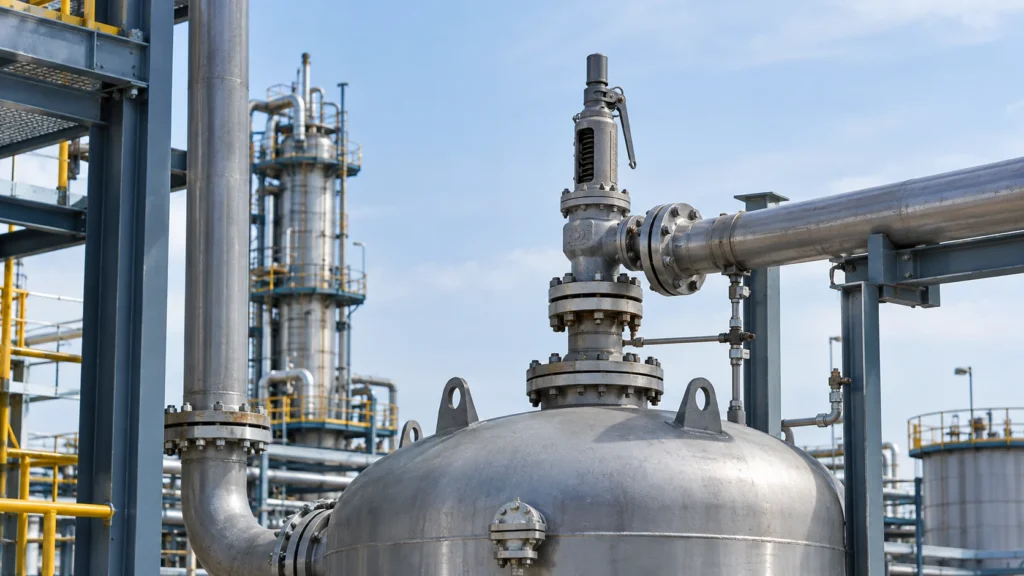
PSV sizing is the engineering process of determining the required capacity and effective orifice area of a pressure safety valve for the applicable overpressure scenario.
The assessment begins by identifying credible conditions that could cause pressure to exceed the equipment’s permitted limit. The required relief load is then calculated, and the valve sizing is performed using the relevant fluid properties, relieving conditions, and applicable engineering methodology.
Depending on the application, the calculation may consider:
- Equipment design pressure and the applicable set-pressure basis.
- Relieving pressure and temperature.
- Fluid composition and physical properties.
- Required relief load for the governing scenario.
- Gas, vapour, liquid, or two-phase flow behaviour.
- Allowable overpressure or accumulation, as applicable.
- Backpressure and relevant installation constraints.
PSV sizing is not simply a matter of selecting a valve based on the equipment’s normal operating pressure. The required capacity depends on the credible overpressure scenario, the process conditions during relief, and the applicable design requirements.
Why Is Correct PSV Sizing Important?
An unsuitable or inadequately sized pressure relief device can compromise the protection of process equipment. If the required relief capacity is underestimated, the valve may not provide sufficient capacity for the governing scenario. Incorrect assumptions about fluid behaviour, relieving conditions, or installation effects can also lead to an unsuitable design.
A systematic PSV sizing assessment helps to:
- Establish the required relief capacity for credible overpressure scenarios.
- Support protection of pressure vessels and other pressurised equipment.
- Evaluate the engineering basis for new or existing pressure relief devices.
- Identify relevant process data gaps and calculation assumptions.
- Support plant modifications and changes in operating conditions.
- Provide documented calculations for engineering review and design coordination.
- Identify when further assessment of inlet piping, backpressure, or the discharge system may be necessary.
PSV sizing is one component of an overall overpressure protection strategy. The adequacy of the complete arrangement also depends on equipment design limits, the applicable code requirements, installation details, and the associated relief disposal system.
Our PSV Sizing Services
INDSAFE’s PSV sizing work can be scoped around new equipment, existing installations, or process modifications. The activities included in each engagement depend on the agreed scope and the availability of reliable process and equipment data.
1. Overpressure Scenario Assessment
The first step is to identify credible conditions that may cause pressure to exceed the allowable limit of the equipment being protected.
Potential scenarios, where applicable, include:
- Blocked outlet or downstream flow restriction.
- Relevant control valve or control system failures.
- Loss of cooling or other essential utilities.
- External fire exposure.
- Thermal expansion of blocked-in liquid.
- Heat exchanger tube rupture.
- Gas blow-by from a higher-pressure system.
- Abnormal process conditions that may generate excessive pressure.
The applicable scenarios depend on the equipment configuration, process design, operating conditions, and credible failure mechanisms. Each scenario must be assessed on its own merits; not every scenario applies to every item of equipment.
2. Relief Load Calculation
Relief load calculation determines the flow rate that must be discharged to address the applicable overpressure scenario.
The calculation method depends on the initiating event and the physical behaviour of the process fluid. For example, the relief load associated with external fire exposure is evaluated differently from thermal expansion, blocked outlet, or gas blow-by.
The assessment may require:
- Verified process and equipment data.
- Fluid composition and relevant physical properties.
- The applicable relieving pressure and temperature.
- Scenario-specific heat input, inflow, or other contributing factors.
- The required discharge rate for the governing case.
- Evaluation of the assumptions and limitations affecting the result.
The resulting relief load provides the basis for the subsequent valve sizing calculation.
3. Pressure Safety Valve Sizing Calculations
Using the established relief load and relieving conditions, the required valve capacity and sizing area are calculated in accordance with the applicable methodology.
Depending on the process service, this may include:
- Gas and vapour relief calculations.
- Liquid relief calculations.
- Steam relief calculations.
- Specialised calculations for applicable flashing or two-phase flow conditions.
The calculation method must be appropriate to the fluid behaviour and design basis. Two-phase relief may require specialised methods and additional process information, so it should not automatically be treated as conventional single-phase flow.
The objective is to establish the required relief capacity and provide a documented engineering basis for evaluating a suitable pressure relief device.
4. PSV Selection Basis Review
Valve sizing establishes the required capacity, but the selected device must also be suitable for its intended service.
Where included in the agreed scope, the review may consider:
- Required capacity and available certified valve orifice sizes.
- Valve type and operating characteristics.
- Set pressure and applicable overpressure requirements.
- Fluid compatibility and material considerations.
- Relieving temperature and phase.
- Superimposed and built-up backpressure.
- Suitability of conventional, balanced-bellows, or pilot-operated designs, where applicable.
Final valve selection should be checked against the manufacturer’s certified capacity, applicable code requirements, and the actual process and installation conditions. A calculated orifice area alone does not establish the suitability of a specific valve.
5. Existing PSV Review and Re-Sizing Assessment
An existing pressure safety valve may need to be reassessed when the original design basis no longer reflects the current process conditions.
A review may be appropriate following:
- Plant capacity expansion or debottlenecking.
- Changes in fluid composition or process service.
- Changes in operating conditions.
- Equipment replacement or modification.
- Changes to upstream or downstream process connections.
- Findings from a process hazard review.
- Identification of missing or outdated sizing calculations.
The assessment compares the available sizing basis with the revised conditions and applicable relief scenarios. Where important information is unavailable, the data gaps and assumptions should be identified before drawing conclusions about adequacy.
6. Relief System Interface Considerations
PSV performance can be influenced by the connected inlet piping, discharge piping, and relief disposal arrangements.
Where included in the project scope, relevant considerations may include inlet pressure loss, discharge line pressure drop, superimposed and built-up backpressure, and interaction with a common relief header.
These checks are important because an individually sized valve does not, by itself, demonstrate that the entire pressure relief system is adequate. Relief header, flare, vent, and disposal-system analyses may require separate calculations and a clearly defined engineering scope.

Our PSV Sizing Methodology
INDSAFE follows a structured engineering approach tailored to the equipment, process conditions, applicable standards, and agreed deliverables.

Step 1: Data Collection and Review
Review available P&IDs, equipment datasheets, design pressures, operating conditions, fluid properties, existing PSV information, and relevant project documents.
Step 2: Overpressure Scenario Identification
Identify credible overpressure scenarios for the equipment under assessment and establish the basis for the applicable relief cases.
Step 3: Relief Load Determination
Calculate the required relief load for each relevant scenario using an appropriate engineering method and verified input data.
Step 4: PSV Sizing Calculation
Determine the required valve capacity and sizing area using the applicable equations, fluid properties, relieving conditions, and code or standard requirements.
Step 5: Relevant Design Checks
Where included in the agreed scope, evaluate valve selection parameters, inlet pressure loss, backpressure, and interfaces with the discharge system.
Step 6: Calculation Documentation
Document the input data, calculation basis, assumptions, results, and recommendations in the agreed deliverable format. Identify material data gaps and any additional engineering checks required.
Codes and Standards for PSV Sizing
The applicable codes and standards depend on the equipment, industry, jurisdiction, and project design basis. Relevant references may include:
- API Standard 520, Part I: Sizing and selection of pressure-relieving devices.
- API Standard 520, Part II: Installation considerations for pressure-relieving devices.
- API Standard 521: Pressure-relieving and depressuring systems.
- ASME Boiler and Pressure Vessel Code, Section VIII: Applicable requirements for pressure vessels and their overpressure protection.
- ISO 4126 series: Safety devices for protection against excessive pressure, where applicable.
The applicable edition and specific requirements should be confirmed for each project. These standards have different scopes and should be applied according to the equipment and governing design requirements rather than treated as interchangeable.
Typical PSV Sizing Deliverables
Deliverables are defined according to the agreed scope and available process information. Depending on the engagement, they may include:
- PSV sizing calculation sheets.
- Overpressure scenario and governing-case summary.
- Relief load calculations and supporting assumptions.
- Required valve capacity and sizing area.
- Relevant process and relieving conditions.
- Calculation inputs for PSV datasheets or technical recommendations.
- Inlet pressure loss and backpressure checks, where included.
- Identified data gaps, assumptions, and design limitations.
- Recommendations for additional engineering review, where required.
Valve datasheet preparation, detailed valve selection, relief header analysis, and flare or disposal-system calculations should be included explicitly in the scope if required.
Industries We Support
PSV sizing may be required in industries where process equipment is exposed to potential overpressure, including:
- Chemical and specialty chemical manufacturing.
- Petrochemical and refining facilities.
- Oil and gas processing.
- Pharmaceutical manufacturing.
- Fertiliser and bulk chemical plants.
- Power and energy facilities.
- Food and beverage processing, where applicable.
- General industrial and process manufacturing.
The engineering assessment is tailored to the equipment, process fluid, operating conditions, and applicable design requirements.
Why Choose INDSAFE for PSV Sizing?
Pressure relief calculations require a clear understanding of the process conditions and the scenario the device is intended to address. Relief loads, valve capacity, installation effects, and the wider protection arrangement must be considered in the context of the equipment being protected.
INDSAFE applies a process-safety-focused approach to PSV sizing, with emphasis on:
- Scenario-based assessment: Establishing the required relief capacity from credible overpressure conditions.
- Engineering-based calculations: Using methods appropriate to the fluid, relieving conditions, and equipment.
- Process design coordination: Reviewing relevant process documentation and equipment information.
- Standards-aware assessment: Considering applicable codes, standards, and project requirements.
- Documented results: Presenting calculation assumptions, results, and limitations for engineering review.
The scope of each engagement is agreed according to the client’s requirements, available information, and required deliverables.
Frequently Asked Questions About PSV Sizing
What is PSV sizing?
PSV sizing is the calculation of the required capacity and sizing area of a pressure safety valve for an applicable overpressure scenario. It considers the relief load, relieving conditions, fluid properties, and relevant sizing methodology.
What is the difference between a PSV and a PRV?
PSV means pressure safety valve, while PRV commonly means pressure relief valve. Terminology varies across industries and standards, so the actual device type and operating characteristics should be confirmed for the application.
When is PSV sizing required?
PSV sizing is commonly required during new equipment design, new plant development, equipment modifications, capacity changes, or reviews of existing pressure relief protection. It may also be required when process changes or hazard review findings affect the original relief basis.
What information is required for PSV sizing?
The required information depends on the equipment and relief scenario. It may include equipment design pressure, operating conditions, set pressure, fluid composition and properties, relieving temperature, required relief load, P&IDs, and equipment datasheets. Additional information may be required for fire exposure, two-phase flow, backpressure, or relief system analysis.
Which standards are used for PSV sizing?
API 520 is a key reference for sizing and selecting pressure-relieving devices, while API 521 addresses pressure-relieving and depressuring systems. ASME Section VIII and the ISO 4126 series may also be relevant depending on the equipment and governing design basis.
Can an existing PSV be re-sized after a plant modification?
Yes. A modification may change the required relief load or the conditions under which the valve operates. The original sizing basis should be reviewed against the revised process conditions and applicable scenarios before determining whether the existing device remains suitable.
Does PSV sizing include flare or relief header design?
Not necessarily. Individual PSV sizing and the analysis of a common relief header, flare network, vent system, or disposal system are related but distinct engineering activities. These should be included in the agreed scope when required.
What is the difference between PSV sizing and a complete pressure relief system assessment?
PSV sizing determines the required capacity for a defined relief case and evaluates the sizing basis for the device. A broader pressure relief system assessment may also examine scenario coverage, connected piping, backpressure, relief headers, disposal systems, and other relevant interfaces. The required scope depends on the facility and project objectives.
Related Process Safety Services
PSV sizing may form part of a broader process safety assessment. Depending on the project requirements, related INDSAFE services include:
- Process Safety Management (PSM): A systematic approach to managing major process hazards.
- HAZOP Study Services: Systematic identification of process deviations, their causes, consequences, and safeguards.
- Functional Safety Studies: Assessment of applicable safety instrumented functions and systems.
- Process Safety Gap Assessment: Review of process safety arrangements against defined requirements.
- Quantitative Risk Assessment (QRA): Quantitative evaluation of risk from defined hazardous scenarios where required.
- Chemical Reaction Hazard Assessment: Evaluation of reaction-related hazards that may contribute to abnormal pressure generation or runaway conditions.
Discuss Your PSV Sizing Requirements with INDSAFE
Whether you are sizing a new pressure safety valve, reviewing an existing device, or reassessing pressure relief requirements following a process change, a documented engineering basis is essential.
Contact INDSAFE to discuss your equipment, process conditions, available documentation, and the scope required for PSV sizing and pressure relief assessment.