

Structural Safety
Let us understand how we can help you
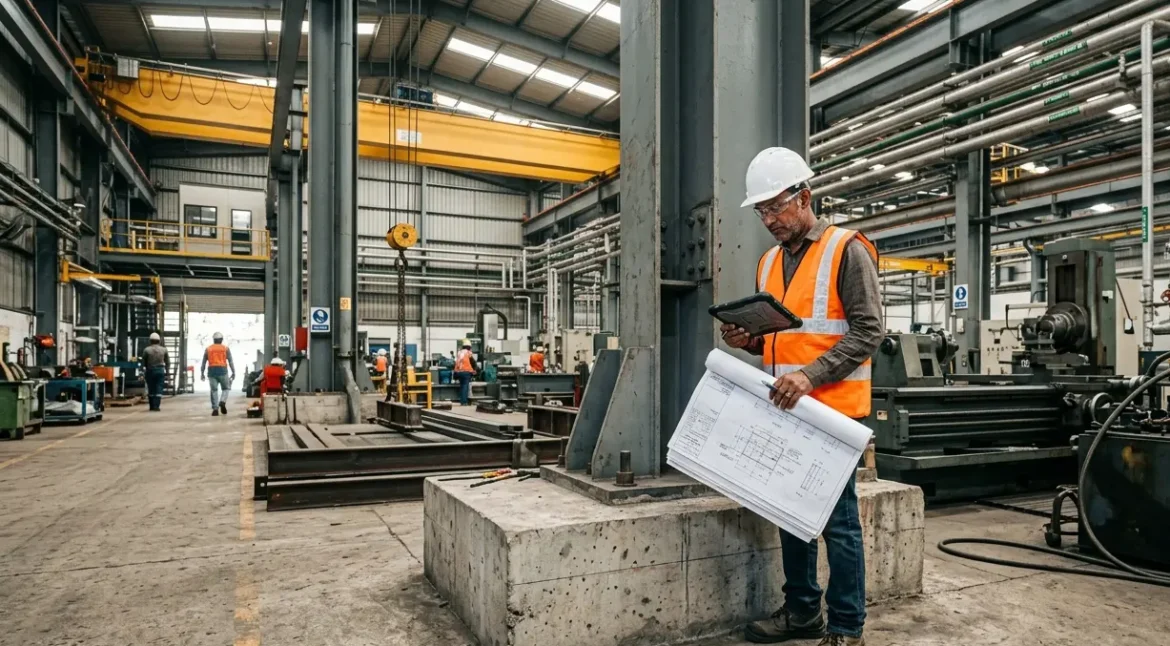
Industrial and commercial structures are designed to support specific loads throughout their service life. However, equipment additions, process modifications, increased storage capacity, ageing foundations, and changes in operational requirements can significantly alter the loads acting on a structure.
Indsafe provides Structural Load & Foundation Assessment Services in India to evaluate whether existing buildings and foundations can safely withstand present and future loading conditions. Our assessments help organizations identify structural limitations, verify load-bearing capacity, assess foundation performance, and make informed engineering decisions before expansion, equipment installation, or facility modifications.
Using engineering analysis, field assessments, and applicable Indian Standards, we help clients improve structural safety, reduce operational risks, and support long-term asset reliability.
What is Structural Load & Foundation Assessment?
Structural Load & Foundation Assessment is a detailed engineering evaluation carried out to determine whether a structure and its supporting foundation can safely withstand applied loads without compromising stability, strength, or serviceability.
The assessment considers both existing operational loads and future loading scenarios, helping organizations ensure that buildings remain safe throughout their intended service life.
It is particularly important before installing heavy machinery, adding new floors, increasing storage loads, changing building occupancy, or expanding industrial facilities.
Why Structural Load Assessment is Important
Industrial facilities evolve continuously. New equipment is installed, production capacities increase, layouts change, and operational demands grow. These changes may introduce loads that were never considered during the original structural design.
Without proper engineering assessment, excessive loading can result in:
- Structural cracking
- Excessive deflection
- Foundation settlement
- Column overstressing
- Beam failure
- Floor overloading
- Reduced structural stability
- Increased maintenance costs
- Safety risks to personnel and assets
A professional structural load assessment helps organizations verify structural adequacy before these issues become critical.
Why Foundation Assessment is Equally Critical
A structure is only as reliable as the foundation supporting it. Even when the superstructure appears sound, foundation-related issues can compromise overall structural performance.
Common causes of foundation distress include:
- Differential settlement
- Soil movement
- Increased structural loading
- Water ingress
- Poor drainage
- Vibration from heavy machinery
- Changes in groundwater conditions
- Nearby excavation activities
Early identification of foundation problems allows corrective measures to be implemented before major structural damage occurs.
Scope of Work – What We Do
Our Structural Load & Foundation Assessment follows a systematic engineering methodology to evaluate the capacity and performance of existing structures.
1. Structural Load Analysis
Our engineers assess whether structural members can safely withstand various loading conditions, including:
- Dead Loads
- Live Loads
- Equipment Loads
- Wind Loads
- Seismic Loads
- Future Expansion Loads
Advanced engineering software and structural calculations are used to evaluate the behaviour of structural elements under different loading combinations.
2. Evaluation of Existing Structural Capacity
We assess:
- Beams
- Columns
- Slabs
- Roof systems
- Steel structures
- Industrial platforms
- Pipe racks
- Equipment support structures
- Mezzanine floors
The evaluation determines whether these components remain adequate for current and proposed operational requirements.
3. Foundation Assessment
Our engineers evaluate the condition and performance of foundations by assessing:
- Differential settlement
- Soil movement
- Foundation distress
- Tilting
- Structural deformation
- Load transfer mechanisms
- Visible signs of foundation failure
These assessments help identify issues that may affect the long-term stability of the structure.
4. Structural Performance Evaluation
Using engineering calculations and structural analysis, we evaluate:
- Load distribution
- Structural stresses
- Deflection
- Stability
- Structural safety margins
- Capacity for future modifications
This provides a realistic understanding of how the structure performs under operational conditions.
5. Recommendations
Based on assessment findings, our engineers provide practical recommendations, including:
- Load redistribution
- Structural strengthening
- Foundation improvement
- Equipment relocation
- Operational load limitations
- Monitoring requirements
- Further engineering investigations
Our Assessment Methodology
Step 1 – Engineering Data Collection
Review of structural drawings, design calculations, equipment layouts, and operational loading information.
Step 2 – Site Inspection
Inspection of structural members, foundations, and areas subjected to significant operational loads.
Step 3 – Load Assessment
Evaluation of existing and proposed loading conditions using engineering calculations and structural analysis.
Step 4 – Foundation Evaluation
Assessment of foundation behaviour, settlement, soil-related issues, and structural interaction.
Step 5 – Engineering Analysis
Assessment of structural adequacy, safety factors, and future loading capacity.
Step 6 – Technical Report
Preparation of a comprehensive engineering report containing:
- Assessment methodology
- Structural observations
- Load evaluation
- Foundation assessment
- Engineering calculations
- Recommendations
- Corrective actions
Applicable Standards & Guidelines
Our assessments are performed in accordance with applicable engineering standards, including:
- IS 875 (Part 1) – Dead Loads
- IS 875 (Part 2) – Imposed (Live) Loads
- IS 875 (Part 3) – Wind Loads
- IS 875 (Part 4) – Snow Loads
- IS 875 (Part 5) – Special Loads & Load Combinations
- IS 1893 (Part 1) – Earthquake Resistant Design of Structures
- IS 456:2000 – Plain and Reinforced Concrete
- IS 800:2007 – General Construction in Steel
- IS 16700:2017 – Tall Concrete Buildings
- National Building Code (NBC) of India
Industries We Serve
Our Structural Load & Foundation Assessment Services support:
- Manufacturing Facilities
- Chemical & Petrochemical Plants
- Pharmaceutical Industries
- Food & Beverage Facilities
- Warehouses & Logistics Centres
- Power & Energy Plants
- Infrastructure Projects
- Commercial Buildings
- Industrial Processing Facilities
- Cement & Steel Plants
- Heavy Engineering Industries
Why Choose Indsafe?
Experienced Structural Engineers
Engineering assessments backed by practical industrial experience.
Advanced Structural Analysis
Use of engineering software and analytical methods to evaluate structural behaviour under different loading conditions.
Practical Engineering Solutions
Recommendations focused on safe operation, future expansion, and long-term structural performance.
Standards-Based Assessment
Evaluations aligned with Indian Standards and recognised engineering practices.
Supporting Safe Facility Expansion
Helping organizations make informed decisions before installing new equipment or increasing operational loads.
Related Structural Safety Services
Organizations undertaking load assessments may also require:
- Structural Audit & Condition Assessment
- Structural Stability Certification
- NDT Testing & STAAD Analysis
- Chartered Engineer Services
- Seismic Vulnerability Assessment
- Retrofitting, Rehabilitation & Strengthening
- Structural Health Monitoring (SHM)
Frequently Asked Questions
It is recommended before installing heavy machinery, increasing storage loads, modifying buildings, adding new floors, or changing the operational use of a facility.
Not always. A structural load assessment verifies whether the existing structural members and foundations have adequate capacity for additional loads.
Foundation issues such as settlement, soil movement, or distress can affect the stability of the entire structure. Early assessment helps prevent costly structural failures.
Yes. Structural load assessments include engineering analysis, calculations, and evaluation of applicable loading conditions to determine structural adequacy.
Get in Touch
Planning a facility expansion, equipment installation, or operational modification? Indsafe’s Structural Load & Foundation Assessment Services help you verify structural capacity, assess foundation performance, and make informed engineering decisions that improve safety, reliability, and long-term asset performance.