

Design & Engineering
Let us understand how we can help you
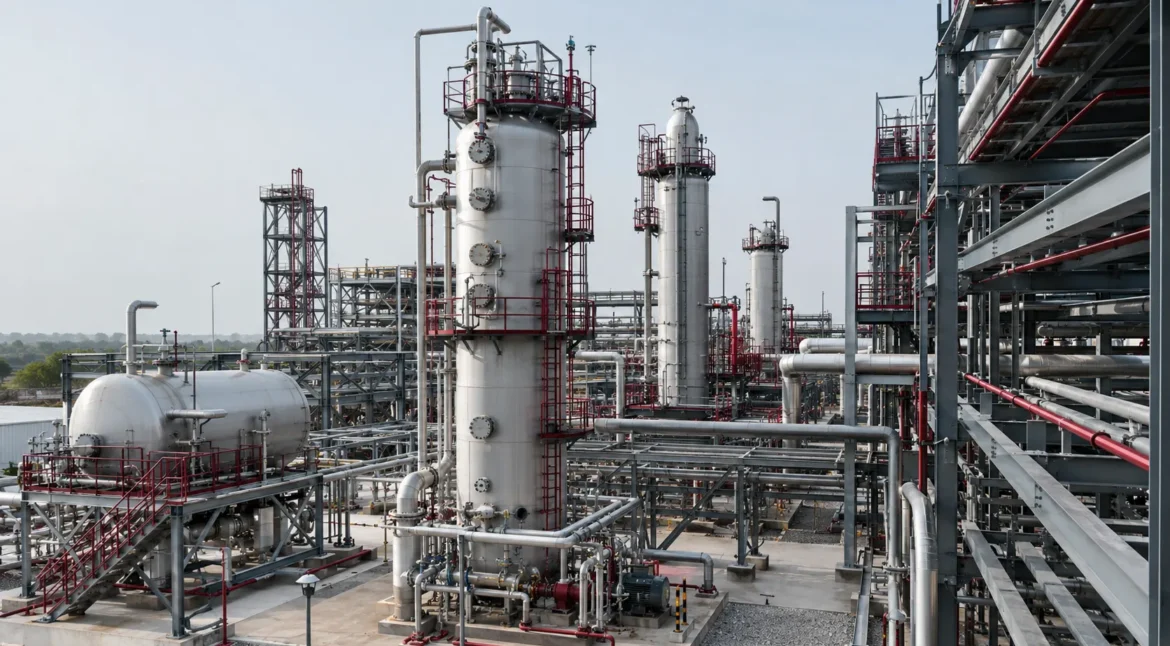
INDSAFE provides Basic Engineering Services to support the development of industrial projects through engineering design, process documentation, preliminary specifications and multidisciplinary coordination.
Our services help establish the principal design parameters, engineering criteria, equipment requirements and technical documentation needed to progress projects towards subsequent engineering and execution stages.
Basic Engineering support can be tailored to new industrial facilities, plant expansions, capacity upgrades and modifications to existing facilities. The scope is defined according to project objectives, available technical information, applicable design requirements and agreed deliverables.
What Is Basic Engineering?
Basic Engineering is the development of a selected project concept into a defined engineering package that establishes the principal technical requirements for subsequent project development.
Depending on the project delivery model, this phase may include the design basis, process parameters, process flow diagrams, P&IDs, preliminary equipment specifications, initial layouts and supporting engineering documentation.
The resulting package provides a technical foundation for detailed engineering, equipment procurement planning, cost estimation and project execution. It also helps identify design constraints, technical interfaces and outstanding information at an early stage.
The boundary between Basic Engineering and Front-End Engineering Design (FEED) varies across industries and organizations. Their scopes may overlap, so the terminology, design maturity and deliverables should be established for each project.
Why Is Basic Engineering Important?
A well-defined engineering basis helps project teams establish technical requirements before progressing into more detailed design and execution.
Basic Engineering can help organizations:
Establish design criteria: Define principal engineering requirements, process parameters and design assumptions.
Define equipment requirements: Develop preliminary equipment specifications and technical inputs.
Improve engineering coordination: Identify interfaces between relevant disciplines.
Identify design constraints: Highlight technical gaps and information requiring clarification.
Support project planning: Provide engineering inputs for preliminary cost estimates and project schedules.
Prepare for detailed engineering: Establish a consistent basis for subsequent design development.
Consider process safety: Incorporate relevant safety and operational requirements into engineering decisions.
The extent of these benefits depends on the project scope, completeness of the design inputs and quality of the resulting engineering package.
Scope of Work – Our Basic Engineering Services

INDSAFE’s Basic Engineering scope is tailored to the facility, project objectives and engineering disciplines involved. The following activities may be included where applicable.
1. Process Engineering
Development and review of process design information to establish the principal technical and operating requirements of the facility.
Potential deliverables include:
Process design basis and engineering criteria.
Process descriptions and operating philosophy documentation.
Heat and material balances, where applicable.
Process Flow Diagram (PFD) development.
Preliminary process equipment sizing and calculations.
Process engineering inputs for P&ID development.
2. P&ID Development and Engineering
Preparation and review of Piping and Instrumentation Diagrams (P&IDs) to represent process equipment, piping, instrumentation and relevant control interfaces.
Activities may include:
P&ID development and review.
Identification of process equipment and piping requirements.
Representation of preliminary instrumentation and control requirements.
Identification of relevant isolation and protection requirements.
Coordination of process and instrumentation interfaces.
The level of detail depends on the design stage, available process information and agreed deliverables.
3. Equipment Engineering and Specifications
Development of preliminary technical requirements for major equipment and supporting systems using the process design basis and project criteria.
Depending on the scope, activities may include:
Equipment lists and preliminary sizing.
Equipment data sheets.
Technical specifications for major equipment.
Identification of operating conditions and utility requirements.
Technical inputs for vendor enquiries.
Review of vendor documentation, where included.
Final equipment selection, detailed mechanical design and vendor approval responsibilities should be defined separately where applicable.
4. Piping and Plant Layout Engineering
Development of preliminary plant layouts and piping arrangements to support facility planning and engineering coordination.
Potential deliverables include:
Preliminary plot plans and equipment layouts.
Piping routing and layout development.
Equipment access and maintenance space considerations.
Identification of piping, equipment and pipe rack interfaces.
Preliminary piping documentation, as required by the agreed scope.
Detailed piping isometrics, fabrication drawings, 3D modelling and clash detection should be specified separately where required.
5. Utility and Supporting Systems Engineering
Identification and documentation of utility requirements and supporting system interfaces necessary for the intended facility operation.
Activities may include:
Identification of process and utility requirements.
Preliminary utility flow diagrams.
Utility consumption estimates, where applicable.
Identification of supporting system requirements.
Coordination of utility interfaces with process equipment.
The extent of utility design and associated calculations depends on the project requirements and engineering scope.
6. Process Safety Integration
Relevant process safety considerations can be incorporated into Basic Engineering to inform design development and identify requirements that need further evaluation.
Depending on the scope, activities may include:
Preliminary Hazard Identification (HAZID), where required.
HAZOP study coordination or support, where agreed.
Identification of process hazards and design constraints.
Review of relevant isolation and protection requirements.
Tracking of actions from safety studies that affect engineering design.
Formal process safety studies, detailed safeguard design and implementation verification should be explicitly included in the agreed scope where required.
7. Engineering Documentation and Coordination
Preparation and coordination of technical documents to establish a consistent basis for subsequent project phases.
Potential deliverables include:
Basic Engineering Design Basis.
Engineering drawings and calculations within the agreed scope.
Equipment and line lists, where applicable.
Technical specifications and data sheets.
Engineering deliverables register.
Design assumptions and interface register.
Documentation of outstanding technical information.
Key Deliverables of Basic Engineering
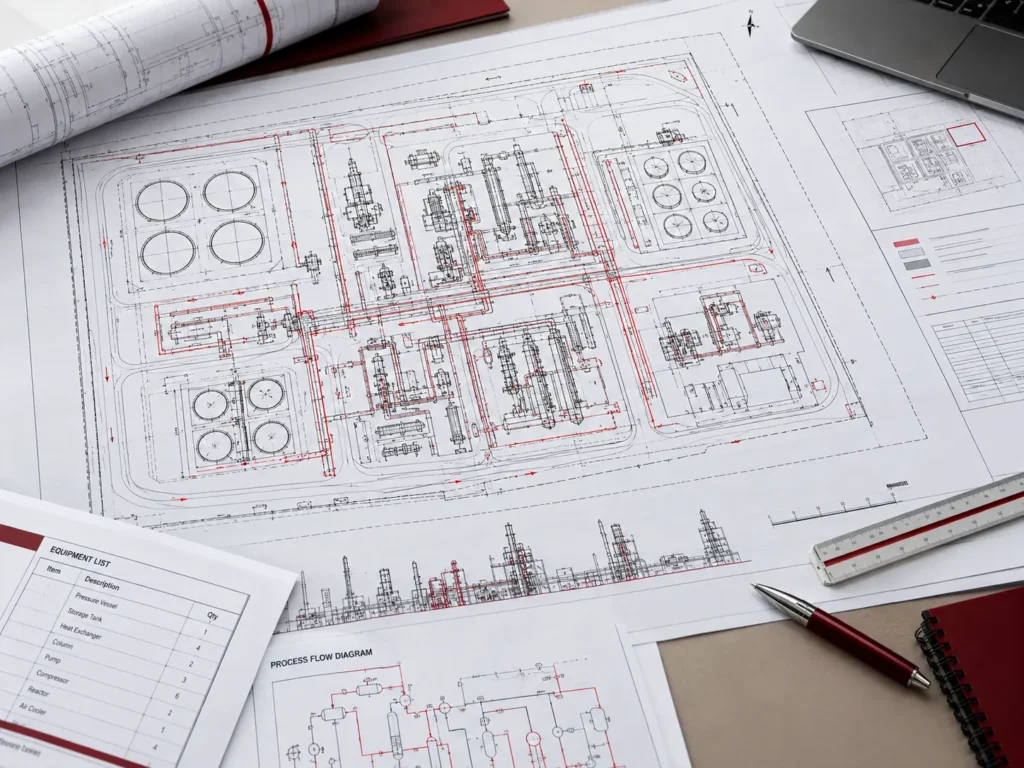
The deliverables depend on the facility type, design maturity, engineering disciplines and project requirements.
Typical deliverables may include:
Basic Engineering Design Basis and Design Criteria.
Process Flow Diagrams (PFDs).
Piping and Instrumentation Diagrams (P&IDs).
Heat and Material Balance, where applicable.
Preliminary plot plans and equipment layouts.
Equipment lists and data sheets.
Preliminary piping layouts.
Utility flow diagrams and utility requirements.
Technical specifications and engineering calculations within the agreed scope.
Preliminary instrumentation and control requirements.
Engineering deliverables register.
Design assumptions and interface register.
Basic Engineering report, where required.
Not every project requires all these deliverables. The document list, level of detail, review responsibilities and approval status should be agreed before engineering work begins.
Our Basic Engineering Methodology
INDSAFE follows a structured approach aligned with the project requirements and available technical information.
Step 1 – Project Data Collection and Review
Review the available process information, project specifications, existing drawings, site information and client requirements. Identify missing or conflicting inputs requiring clarification.
Step 2 – Establish the Design Basis
Establish the applicable engineering criteria, process parameters, design assumptions, operating requirements and relevant project interfaces.
Step 3 – Basic Engineering Development
Develop or review the agreed process documentation, equipment specifications, preliminary layouts, utility requirements and other discipline-specific deliverables.
Step 4 – Multidisciplinary Engineering Coordination
Coordinate relevant engineering interfaces to identify inconsistencies, design constraints, technical dependencies and outstanding information.
Step 5 – Technical Review
Review the developed documents against the agreed design basis, project specifications and applicable requirements. Record review comments and track actions through the agreed process.
Step 6 – Engineering Package Finalization
Compile and issue the agreed deliverables with suitable document identification and revision status to support detailed engineering, procurement planning, cost estimation and subsequent project phases, as applicable.
Industries We Serve
Basic Engineering may support projects across a range of industrial sectors, including:
Oil and gas.
Chemical and petrochemical processing.
Pharmaceutical manufacturing.
Food and beverage processing.
FMCG and general manufacturing.
Power and energy.
Industrial processing and storage facilities.
Warehousing and associated industrial infrastructure.
The applicable engineering requirements depend on the facility, process, project objectives and agreed scope.
Applicable Standards and Engineering Requirements
Basic Engineering is developed using the engineering codes, standards, client specifications and design criteria applicable to the project.
Depending on the facility and discipline, these may include relevant BIS, ISO and IEC standards, industry-specific engineering codes, client specifications and applicable statutory or regulatory requirements.
The applicable requirements must be identified for the particular project, jurisdiction, equipment and engineering discipline. Listing a standard or standards organization does not, by itself, establish compliance; the required checks and verification activities depend on the agreed scope.
Why Choose INDSAFE for Basic Engineering Services?
INDSAFE supports industrial project development through structured engineering documentation and coordination of relevant technical interfaces.
Integrated engineering approach: Coordination of process, equipment, piping, layout and documentation requirements within the agreed scope.
Structured documentation: Development of design criteria, drawings, specifications and engineering records.
Safety-conscious design development: Consideration of relevant process safety and operational requirements.
Project-specific solutions: Deliverables aligned with the facility, project objectives and available technical information.
Multidisciplinary coordination: Identification of relevant interfaces, inconsistencies and outstanding technical requirements.
Support for subsequent project phases: Engineering documentation prepared to support further design development, procurement planning and project execution, as applicable.
The specific services, discipline responsibilities and verification requirements are established according to the agreed project scope.
Related Engineering Services
Depending on project requirements, Basic Engineering may be complemented by:
FEED Engineering Services – Front-End Engineering Design and project definition.
Detail Engineering Services – More detailed engineering documentation and coordination for project execution.
Process Design Engineering Services – Process design development and technical documentation.
P&ID Development & Engineering Services – Development, review and revision of piping and instrumentation diagrams.
Piping Layout Engineering Services – Piping arrangements and routing coordination.
Process Safety Studies – Relevant hazard identification and process safety assessment activities, where offered and agreed.
Frequently Asked Questions
What is the difference between Basic Engineering and Detail Engineering?
Basic Engineering establishes the principal design basis, process requirements, preliminary equipment specifications and initial layouts. Detail Engineering develops the agreed design into more detailed drawings, calculations, specifications and documentation for procurement, fabrication, construction or installation, as applicable.
The boundary depends on the project delivery model and agreed scope.
What is the difference between FEED and Basic Engineering?
FEED generally develops a selected project concept to a level that supports project definition, cost estimation, investment decisions and EPC tender preparation. Basic Engineering establishes the principal engineering design and technical documentation for subsequent project development.
The terms and their boundaries vary between industries and organizations, and the two phases may overlap substantially.
What are the main deliverables of Basic Engineering?
Typical deliverables include the design basis, PFDs, P&IDs, equipment data sheets, preliminary layouts, utility requirements, selected engineering calculations and supporting technical documentation. The final list depends on the project scope.
Can Basic Engineering support an existing plant expansion?
Yes. It can support plant expansions, capacity upgrades, process modifications and new equipment installations. The scope should account for existing facility information, operating constraints, engineering interfaces and relevant safety requirements.
Does Basic Engineering include process safety studies?
Process safety activities can be integrated where required. Formal studies such as HAZID and HAZOP should be explicitly included in the agreed scope, with their timing, inputs and deliverables defined.
Does Basic Engineering include detailed construction drawings?
Not necessarily. Basic Engineering typically establishes the principal design requirements and preliminary documentation. The detailed drawings required for fabrication, construction or installation depend on the project stage and whether subsequent Detail Engineering is included.
Discuss Your Basic Engineering Requirements
Planning a new industrial facility, expanding an existing plant or modifying a process? Contact INDSAFE to discuss your Basic Engineering requirements and define a project-specific scope aligned with your technical and operational objectives.