

Let us understand how we can help you
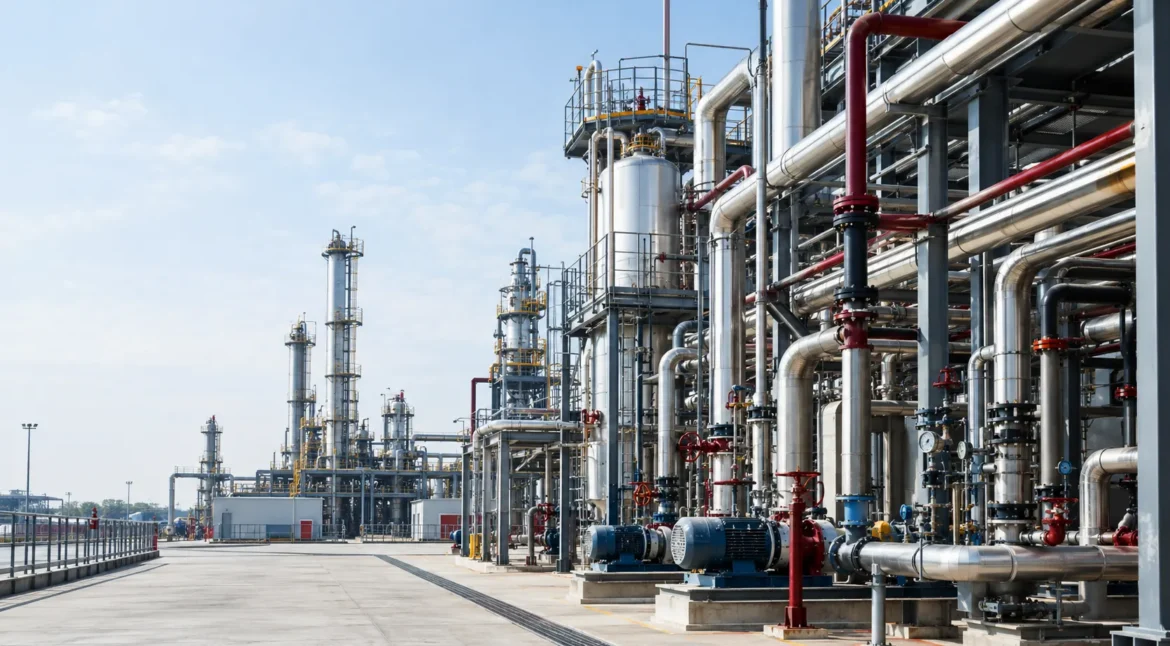
INDSAFE provides Piping Layout Engineering Services for process plants and industrial facilities, supporting the development and coordination of piping arrangements in line with process requirements, equipment locations, plant constraints and project specifications. Our approach focuses on practical pipe routing, equipment connectivity, accessibility and coordination with other engineering disciplines to support reliable plant operation, installation and maintenance.
From new industrial facilities to modifications of existing plants, piping layout engineering helps establish coordinated piping arrangements that align with the intended process, available space and applicable project requirements.
What Is Piping Layout Engineering?
Piping layout engineering is the process of determining the physical arrangement and routing of pipes, fittings, valves and associated components within an industrial facility. It considers equipment connections, operating requirements, available space, access for operation and maintenance, and interfaces with structures and other plant systems.
A well-coordinated piping layout helps reduce routing conflicts, improve accessibility, support practical installation and facilitate future inspection and maintenance. The final scope depends on the project requirements, available engineering inputs and the level of design development required.
Our Piping Layout Engineering Services
1. Piping Arrangement Drawings
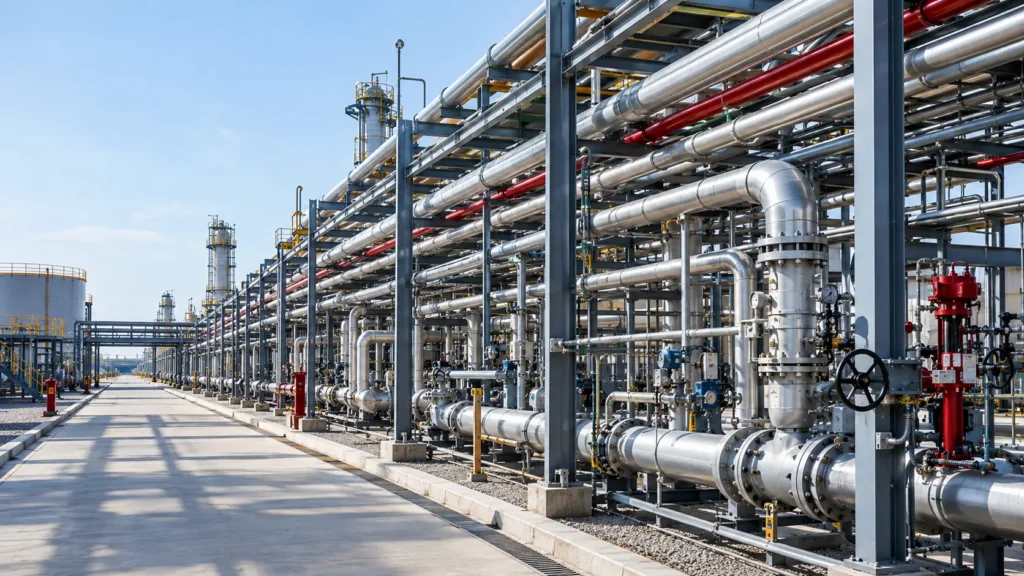
Development of piping arrangement drawings to represent the physical positioning and routing of piping systems within process plants and industrial facilities. These drawings support coordination between piping, equipment, structural and other relevant engineering disciplines.
2. Pipe Routing and Layout Development
Development of piping routes based on approved process information, equipment locations, piping specifications, project requirements and site constraints. Routing considerations may include accessibility, maintainability, practical installation and interfaces with other plant systems.
3. Equipment and Piping Coordination
Coordination of piping arrangements with equipment nozzles, connection points, access areas and surrounding plant infrastructure. This helps establish practical piping configurations while accounting for equipment operation, inspection and maintenance requirements.
4. Pipe Rack and Structural Interface Coordination
Coordination of piping routes with pipe racks, supporting structures, platforms and other relevant structural interfaces. Routing and support-related requirements should be reviewed against project specifications and the responsibilities assigned to each engineering discipline.
5. Piping Layout Review and Modification
Review and updating of existing piping layouts to reflect plant modifications, equipment changes, revised routing requirements or operational constraints. The review scope depends on the information available and may include identifying apparent coordination issues that require further engineering assessment.
6. Coordination with P&IDs and Isometric Drawings
Coordination of piping layouts with Piping and Instrumentation Diagrams (P&IDs), piping isometric drawings and related engineering documentation to maintain consistency between process requirements, physical arrangements and detailed piping representations.
P&IDs communicate process connections, instrumentation and control-related information, while piping layouts show the physical arrangement and routing of piping systems. Isometric drawings provide a more detailed representation of individual piping lines or sections for purposes such as fabrication and installation.
Key Considerations in Piping Layout Engineering
Effective piping layout engineering involves more than fitting pipes into the available space. Depending on the facility and project scope, key considerations include:
Process requirements: Maintaining consistency with approved P&IDs, line specifications and equipment connection requirements.
Accessibility: Providing practical access to valves, instruments, equipment connections and other components requiring operation or inspection.
Operation and maintenance: Considering maintainability, equipment removal requirements and access for routine servicing.
Space and routing constraints: Coordinating pipe routes with equipment, structures, platforms, cable trays and other plant services.
Safety and operability: Considering project-specific access, egress, hazardous-area and other relevant safety requirements.
Structural interfaces: Coordinating piping routes and support requirements with the responsible structural engineering discipline.
Future modifications: Considering practical routing and documentation requirements that may support subsequent plant changes.
Specific requirements and design checks are established according to the applicable codes, standards, project specifications and engineering scope. Piping stress analysis, detailed support design and specialist engineering calculations are separate activities unless expressly included in the agreed scope.
Our Piping Layout Engineering Approach
1. Review of Engineering Inputs
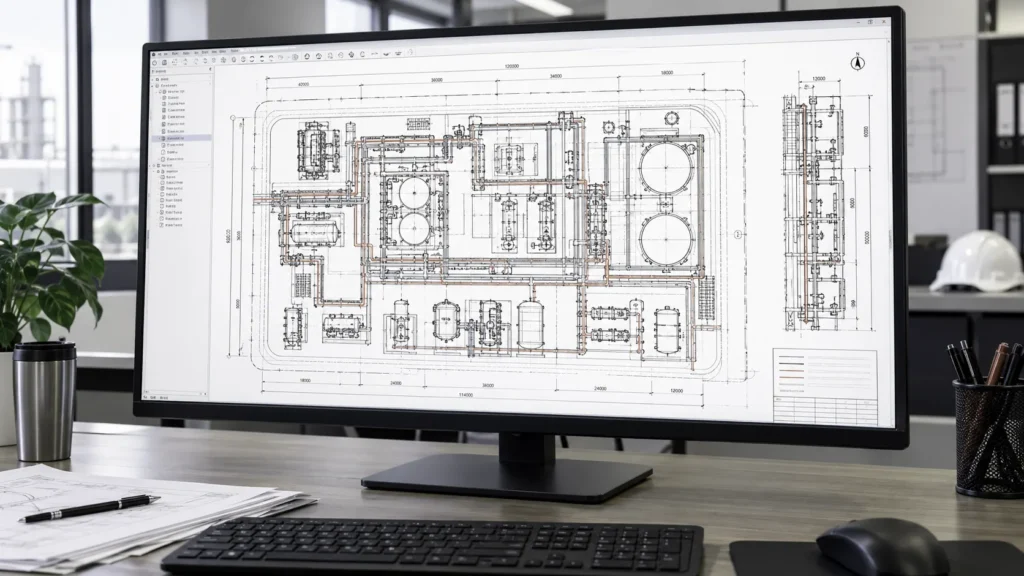
Review available P&IDs, equipment layouts, piping specifications, line lists, plot plans, project standards and relevant site information, as applicable.
2. Piping Route Development
Develop piping arrangements based on process requirements, equipment connections, available space and project-specific routing criteria.
3. Multidisciplinary Coordination
Coordinate proposed routes with equipment, structural, instrumentation, electrical and other relevant disciplines to address interface requirements and identify potential layout conflicts within the agreed scope.
4. Layout Review and Refinement
Review the developed arrangements for consistency with the available design inputs, accessibility, maintainability and applicable project requirements. Resolve comments and revise the layouts as agreed.
5. Drawing Finalization
Incorporate approved revisions and issue the agreed piping layout drawings and associated documentation in the required format and revision status.
Piping Layout Engineering for New and Existing Facilities
New Industrial Facilities
For new facilities, piping layout engineering supports the development of coordinated piping arrangements alongside equipment positioning, plant layout and other engineering activities. Early coordination helps address routing and accessibility requirements before detailed design and installation progress.
Existing Industrial Facilities
For operating facilities, piping layout engineering may support plant modifications, equipment replacement, capacity changes, rerouting and upgrades. Existing drawings and verified site information are important inputs, particularly where the installed arrangement differs from the original documentation.
The extent of site verification, dimensional checks and as-built documentation should be defined according to project requirements and the availability of reliable plant information.
Piping Layout Engineering Deliverables
Depending on the agreed scope, project stage and available inputs, deliverables may include:
Piping layout and arrangement drawings
Equipment and piping interface drawings
Pipe routing layouts
Pipe rack interface layouts
Updated piping layout drawings for plant modifications
Coordinated drawing revisions
Supporting engineering documentation, where included in the scope
The final deliverable list, drawing formats, design criteria and revision requirements should be agreed at the start of the project.
Industries We Support
Piping layout engineering can support a range of process and industrial facilities, including:
Oil and gas facilities
Chemical and petrochemical plants
Pharmaceutical and specialty chemical facilities
Power and energy facilities
Manufacturing and process industries
Other industrial plants requiring coordinated piping systems
The suitability and extent of services depend on the technical requirements and scope of each project.
Why Choose INDSAFE for Piping Layout Engineering?
Piping arrangements need to satisfy process requirements while remaining practical for installation, operation and maintenance. INDSAFE approaches piping layout engineering with an emphasis on technical coordination, drawing consistency and the requirements of industrial facilities.
Our engineering approach focuses on:
Coordination with available process and equipment information
Practical routing and equipment interface considerations
Attention to accessibility and maintainability
Alignment between piping layouts and related engineering drawings
Structured review and revision of project documentation
Scope-based coordination with other engineering disciplines
The engineering scope, applicable design criteria and deliverables are defined according to each project’s requirements.
Frequently Asked Questions
What is the purpose of piping layout engineering?
Piping layout engineering determines the physical arrangement and routing of piping systems within an industrial facility. It considers process requirements, equipment connections, available space, accessibility, maintainability and coordination with other plant systems.
What is the difference between piping layout drawings and P&IDs?
Piping layout drawings show the physical location and routing of pipes within a facility. P&IDs represent process equipment, piping connections, valves, instrumentation and relevant control or safeguard elements schematically. Both documents serve different but complementary engineering purposes.
What is the difference between piping layout and piping isometric drawings?
Piping layout drawings show how piping systems are arranged within the plant. Piping isometric drawings represent individual piping lines or sections in a three-dimensional-style projection, with details such as dimensions, fittings and component information as required for fabrication or installation.
What information is required to develop a piping layout?
Typical inputs include approved P&IDs, equipment layouts, plot plans, piping specifications, line lists, equipment connection details, project design criteria and relevant site information. The exact requirements depend on the facility, design stage and scope of work.
Does piping layout engineering include piping stress analysis?
Not necessarily. Piping layout engineering addresses the physical arrangement and routing of piping systems. Piping stress analysis is a separate engineering activity used to evaluate piping-system behaviour under applicable loads and operating conditions. It should be included only when specifically agreed within the project scope.
Can existing piping layouts be updated for plant modifications?
Yes. Existing layouts can be reviewed and revised to reflect equipment changes, rerouting, plant modifications or other agreed updates. The reliability of the existing drawings and the need for site verification should be assessed before revisions are finalized.
What deliverables are provided for piping layout engineering?
Deliverables may include piping arrangement drawings, pipe routing layouts, pipe rack interface drawings and revised layouts for plant modifications. The final list depends on the project requirements and agreed scope.
Related Design & Engineering Services
Explore related INDSAFE services:
Process Design Engineering Services for process development, calculations and process engineering documentation.
P&ID Development & Engineering Services for piping and instrumentation diagrams and associated engineering documentation.
Piping Isometric Drawing Services for detailed isometric representations of piping lines or sections.
Process Plant Design & Engineering Services for broader plant design and multidisciplinary engineering coordination.
Structural Drawing Services for structural arrangements and engineering drawings, where applicable.
Discuss Your Piping Layout Engineering Requirements
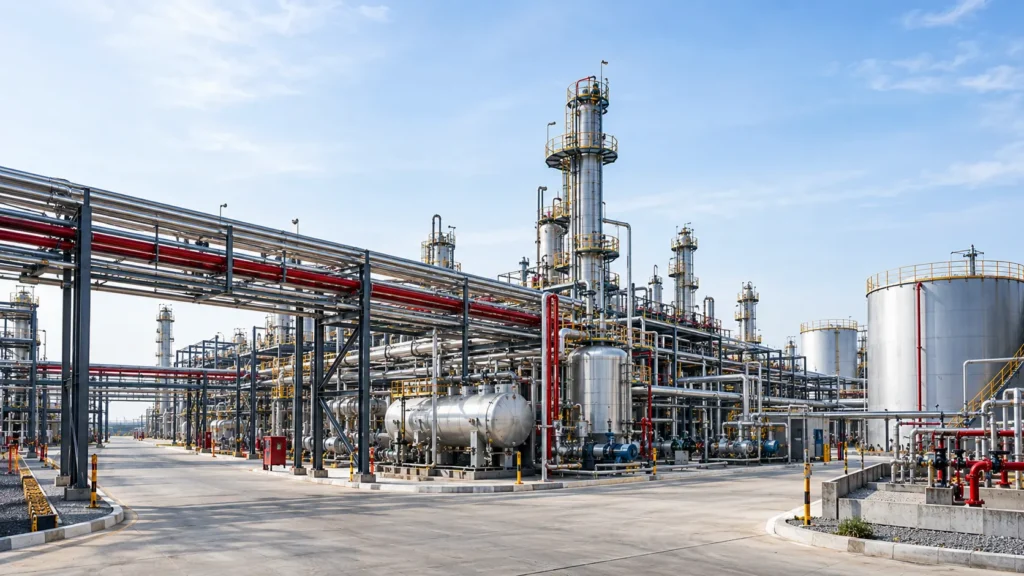
Looking for piping layout engineering support for a new industrial facility or an existing plant modification? Contact INDSAFE to discuss your project requirements, available engineering inputs and expected deliverables.