

Let us understand how we can help you
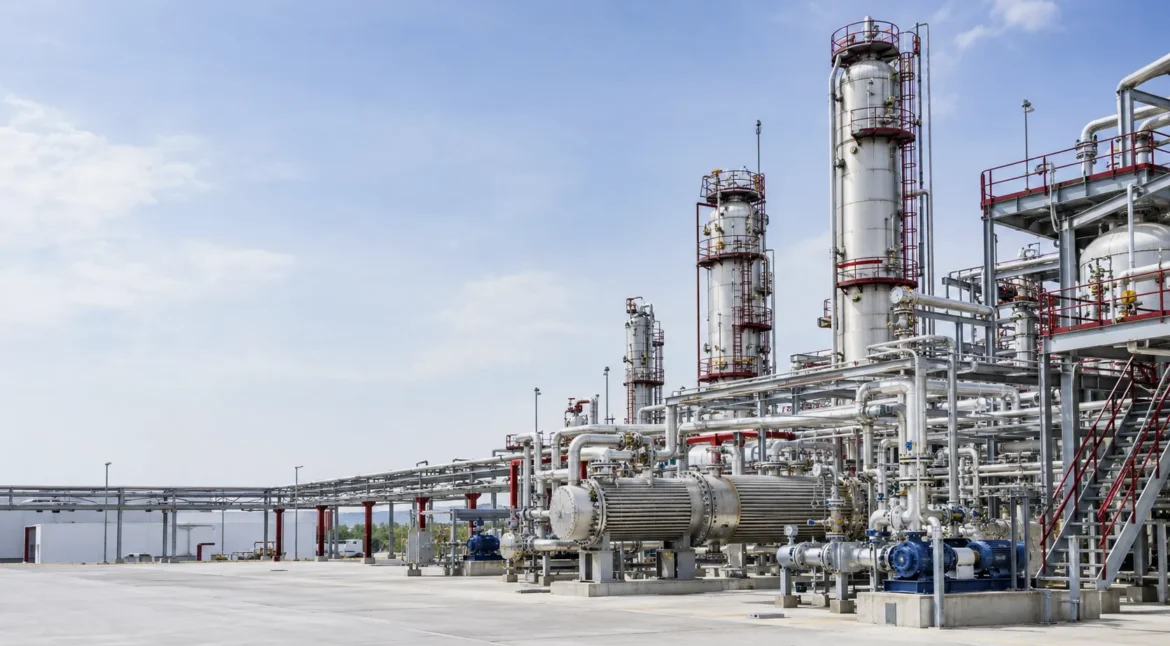
INDSAFE provides P&ID Development & Engineering Services for greenfield projects, brownfield modifications, plant expansions, revamps, existing-facility documentation, and process safety applications. Our approach combines process engineering understanding with process safety and multidisciplinary coordination to develop P&IDs that accurately represent process intent and operational requirements.
A Piping & Instrumentation Diagram (P&ID) is a key engineering document used to define and communicate the functional relationships between process equipment, piping, valves, instrumentation, control elements, and safety devices within an industrial process system. P&IDs support engineering design, process safety studies, plant operation, maintenance, modifications, and project execution throughout the facility lifecycle.
Accurate P&IDs are essential for both new and existing facilities. They provide a common engineering reference for understanding process systems, verifying safeguards, coordinating multidisciplinary engineering activities, and managing plant modifications.
Why P&IDs Matter in Process Plant Engineering

A P&ID is more than a drawing. It provides an engineering representation of how a process system is configured, controlled, isolated, monitored, and protected.
Well-developed and maintained P&IDs help engineering and operations teams understand:
- Process equipment and their interconnections
- Piping systems and process flow paths
- Line identification and piping specifications
- Manual, control and actuated valves
- Instrumentation and control loops
- Alarms, trips and shutdown functions
- Isolation and safeguarding arrangements
- Pressure relief and protection devices
- Utility connections and process interfaces
- Vents, drains, sampling and other process connections
P&IDs are also important inputs to HAZOP Studies, LOPA Studies, process safety reviews, Management of Change (MOC), operating procedures, maintenance planning, engineering modifications, and plant audits.
Outdated or incomplete P&IDs can create discrepancies between documented and actual plant conditions, making engineering reviews and process safety assessments less effective. Maintaining accurate engineering documentation is therefore an important part of reliable facility management.
Our P&ID Development & Engineering Services
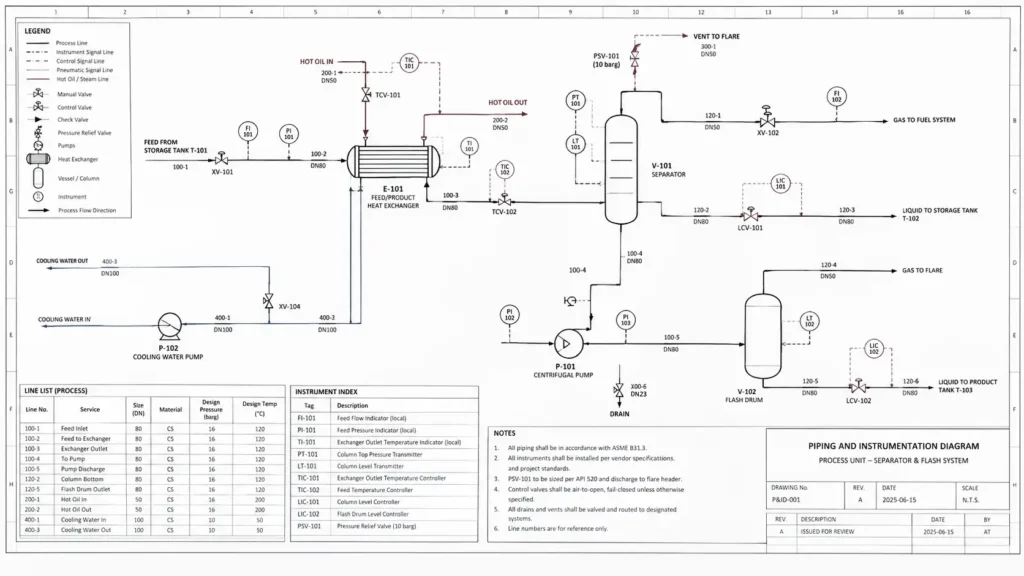
P&ID Development
We develop new Piping & Instrumentation Diagrams for process plants, plant expansions, utility systems, process units, and engineering projects based on available process information, design requirements, engineering specifications, and applicable project standards.
Our development process considers equipment configuration, process lines, valves, instrumentation, control functions, utilities, safeguards, and relevant interfaces.
P&ID Review & Verification
We review existing P&IDs to identify inconsistencies, missing information, incorrect representations, documentation gaps, and potential discrepancies between process intent and documented configuration.
Reviews may support:
- Engineering design verification
- HAZOP and LOPA preparation
- Process safety reviews
- Plant modifications
- Audits and compliance assessments
- MOC activities
- Existing-facility documentation updates
P&ID Redrafting & Standardization
Legacy engineering drawings may exist as scanned documents, PDFs, marked-up drawings, or drawings prepared using outdated drafting conventions.
We support the conversion and redrafting of such documents into structured, standardized engineering drawings while retaining the relevant technical information and incorporating verified updates.
As-Built P&ID Development
For existing facilities, we support the development and updating of P&IDs to better reflect actual plant configuration.
This can include incorporating verified field modifications, equipment changes, piping alterations, instrumentation updates, and completed MOC-related changes into controlled engineering documentation.
Where required, available drawings and engineering records can be reviewed against field information to identify documentation discrepancies.
Instrumentation & Control Representation
P&IDs can represent the instrumentation and control functions required to communicate process operation and safeguarding.
Depending on project scope, this may include:
- Instrument identification and tagging
- Control loops
- Control valves
- Measurement points
- Alarms
- Interlocks
- Shutdown functions
- Actuated valves
- Relevant automation interfaces
The objective is to ensure that the P&ID accurately communicates the intended relationship between the process, instrumentation and control functions.
P&ID Support for Process Safety Studies
P&IDs are critical reference documents for process safety assessments.
We support the preparation, review and updating of P&IDs for applications including:
- HAZOP Studies
- LOPA Studies
- Process Safety Reviews
- Safeguard verification
- MOC reviews
- Risk assessment activities
- Process safety information development and maintenance
Accurate P&IDs help multidisciplinary teams establish a common understanding of the process configuration and safeguards being evaluated.
What Our P&IDs Represent
Depending on project requirements and available engineering information, P&IDs may represent:
Process & Equipment
- Process equipment identification
- Pumps, vessels, tanks, columns and heat exchangers
- Compressors and other major process equipment
- Equipment connections and process interfaces
- Equipment and instrument tagging
Piping & Valves
- Process and utility piping
- Line numbers and relevant piping information
- Pipe sizes and applicable specifications
- Manual valves
- Control and actuated valves
- Isolation arrangements
- Vents, drains and sampling connections
- Flow direction
Instrumentation & Control
- Process measurement points
- Instruments and instrument tags
- Control loops
- Control valves
- Alarms
- Interlocks
- Shutdown functions
- Relevant control-system interfaces
Safeguards & Protection
- Pressure relief devices
- Safety-related valves and devices
- Process safeguarding arrangements
- Emergency shutdown functions where applicable
- Other relevant protective systems represented within the P&ID scope
The exact level of detail and drawing conventions are established according to the project engineering basis, client specifications and applicable standards.
Our P&ID Engineering Approach
1. Process Understanding & Data Collection
We begin by reviewing the available process and engineering information, which may include process design basis, PFDs, equipment data, utility requirements, operating philosophy, existing drawings and project specifications.
2. Engineering Review
The available information is assessed to understand process intent, equipment configuration, piping systems, instrumentation requirements, control functions and relevant safety considerations.
3. P&ID Development or Modification
P&IDs are developed, updated or redrafted to represent the required process configuration, equipment, piping, instrumentation, control functions and applicable safeguards.
4. Cross-Discipline Coordination
P&ID development requires coordination across relevant engineering disciplines. We consider interfaces with process, mechanical, piping, instrumentation and control, electrical, process safety and other project requirements as applicable.
5. Technical Review & Verification
The drawings are reviewed for consistency of equipment identification, line numbering, instrument tagging, valve representation, process connections, control functions and relevant safeguards.
6. Final Documentation & Engineering Support
Final drawings are prepared in the agreed documentation format and can support design reviews, process safety studies, project execution, operations, maintenance and future engineering modifications.
P&ID Engineering for New & Existing Facilities

New & Greenfield Projects
For new facilities, P&IDs provide a detailed engineering representation of process systems following the development of the process design and PFDs.
They support multidisciplinary engineering coordination and provide an important reference for subsequent engineering activities, procurement, construction, commissioning and process safety studies.
Existing & Brownfield Facilities
Existing facilities frequently have legacy drawings that may not fully reflect current plant configuration.
We support P&ID review, redrafting, updating and as-built documentation for:
- Plant modifications
- Capacity expansion
- Revamp projects
- Equipment replacement
- Process changes
- MOC implementation
- Documentation gaps
- Existing-facility process safety studies
P&ID Engineering Deliverables
Depending on the project scope, deliverables may include:
- New P&ID drawings
- Updated and revised P&IDs
- Reviewed and verified P&IDs
- Redrafted legacy P&IDs
- As-built P&IDs
- P&ID mark-ups and review comments
- Equipment and instrument identification
- Line and valve information
- Control and safeguarding representation
- Drawing registers or revision documentation, where required
The final deliverables are aligned with the agreed project scope, client requirements and available engineering information.
Applications Across Industrial Facilities
Our P&ID Engineering Services can support a wide range of process and industrial facilities, including:
- Chemical and specialty chemical plants
- Petrochemical facilities
- Oil & gas facilities
- Pharmaceutical manufacturing
- Food & beverage processing
- FMCG manufacturing
- Water and wastewater treatment facilities
- Utility and off-site systems
- Renewable and emerging energy facilities
- General process and manufacturing facilities
Why Choose INDSAFE for P&ID Engineering?
P&ID engineering requires more than drafting capability. The quality of a P&ID depends on understanding process intent, equipment configuration, piping systems, instrumentation, control functions and process safeguards.
INDSAFE brings together experience across Process Engineering, Process Safety, HAZOP, Risk Assessment, Fire Safety, Electrical Safety and Industrial Operations to provide an integrated perspective on P&ID development and review.
Our approach focuses on:
Engineering Understanding
P&IDs are developed with an understanding of the process and its operational requirements, rather than treated solely as drafting documents.
Process Safety Integration
P&IDs can be reviewed and developed with consideration of process safety studies, safeguards and risk-reduction requirements.
Multidisciplinary Coordination
Relevant process, mechanical, piping, instrumentation, control and safety interfaces are considered within the defined project scope.
Existing Facility Support
We support not only new P&ID development but also review, redrafting, updating and as-built documentation for operating facilities.
Lifecycle-Oriented Documentation
Our objective is to develop engineering documents that remain useful across design, safety assessment, operation, maintenance and future modification activities.
Frequently Asked Questions
What is P&ID engineering?
P&ID engineering involves developing, reviewing or updating Piping & Instrumentation Diagrams to represent process equipment, piping, valves, instrumentation, control functions and relevant safeguards within an industrial process system.
What is the difference between a PFD and a P&ID?
A Process Flow Diagram (PFD) provides a higher-level representation of the major process equipment, process streams and key operating information. A P&ID provides a more detailed representation of piping, valves, instrumentation, control functions, equipment connections and relevant safeguards.
Does INDSAFE provide P&ID review services for existing plants?
Yes. INDSAFE can support review, verification, redrafting, updating and as-built P&ID development for existing and brownfield facilities, subject to the available engineering and field information.
Can P&IDs support HAZOP and LOPA studies?
Yes. P&IDs are important reference documents for HAZOP and LOPA studies because they provide detailed information about equipment, piping, instrumentation, safeguards, isolation arrangements and control functions being evaluated.
What information is required to develop a P&ID?
The information required depends on the project stage and scope but may include the process design basis, PFDs, equipment data, process and utility information, piping information, instrumentation requirements, operating philosophy, existing drawings and applicable engineering specifications.
What is an as-built P&ID?
An as-built P&ID is an engineering drawing updated to represent the verified configuration of a facility after construction, modification or other changes. It helps maintain engineering documentation that reflects the actual plant configuration.
Can INDSAFE convert old or scanned P&IDs into engineering drawings?
Yes. INDSAFE can support redrafting and standardization of legacy, scanned, PDF or marked-up P&IDs, subject to the quality of the source information and the agreed project scope.
Why is P&ID accuracy important for process safety?
Accurate P&IDs help process safety teams understand the documented process configuration, instrumentation, isolation arrangements and safeguards. Inaccurate or outdated drawings can result in discrepancies during HAZOP, LOPA, MOC and other engineering or safety reviews.
Related Design & Engineering Services
P&ID engineering is closely connected with several other engineering activities. Explore our related services:
- Process Design Engineering Services
- Plant Layout & Design
- Piping Layout Engineering
- Isometric Drawings
- Basic Engineering
- FEED Engineering
- Detailed Engineering
- Process Safety Engineering Services
- HAZOP Studies
- LOPA Studies
Discuss Your P&ID Engineering Requirements
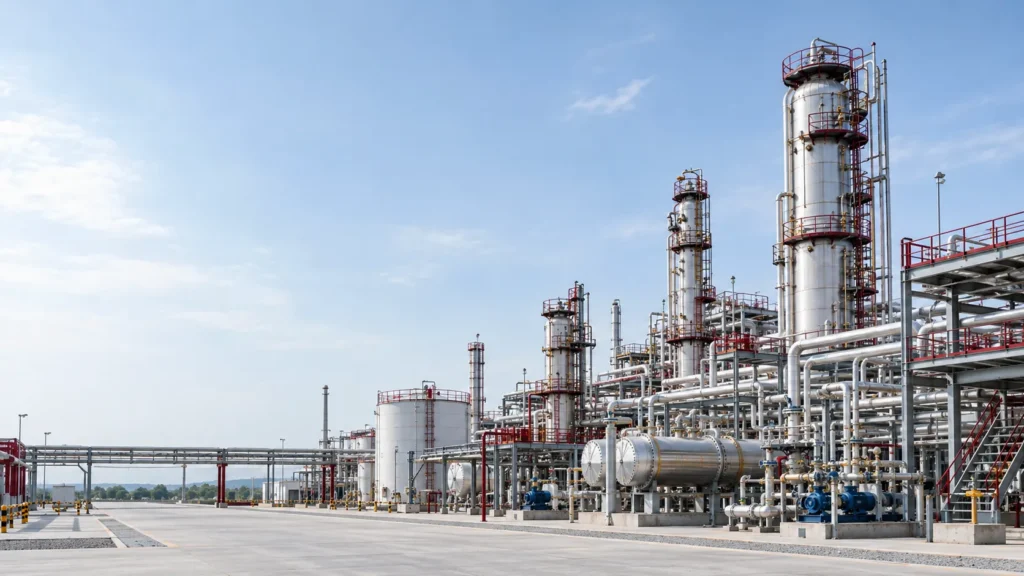
Whether you require new P&ID development, existing P&ID review, legacy drawing redrafting, as-built documentation or P&ID support for a process safety study, INDSAFE can support your engineering requirements based on the project scope and available information.
Discuss your P&ID Engineering Requirements with INDSAFE.