

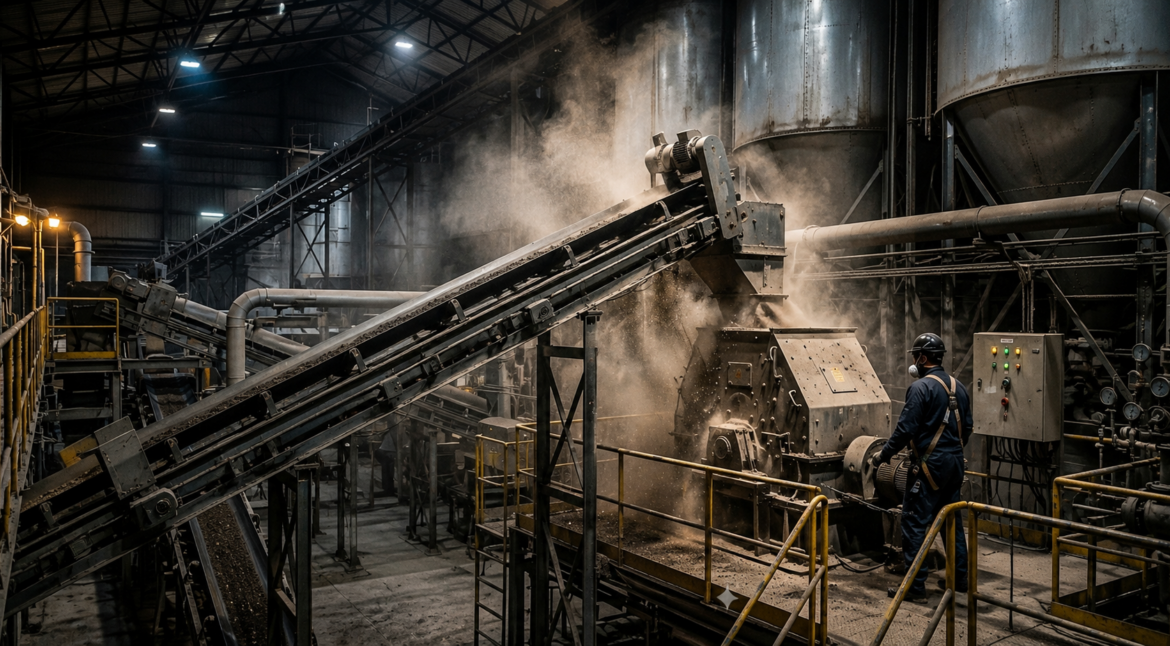
Combustible dust explosions are among the most dangerous and underestimated industrial hazards. Industries handling powders, fine particles, or combustible materials are exposed to significant explosion risks if proper controls are not implemented.
Dust explosions can lead to catastrophic incidents involving fires, fatalities, equipment damage, production downtime, and environmental losses.
At Indsafe, we help industries identify combustible dust hazards through specialized Dust Explosion Risk Assessment and Process Safety studies to improve operational safety and compliance.
What are Dust Explosions?
A dust explosion occurs when fine combustible particles become suspended in air and ignite in the presence of an ignition source within a confined space.
When these conditions exist simultaneously, rapid combustion generates high pressure and temperature, resulting in an explosion.
Industries commonly exposed to combustible dust hazards include:
• Food processing
• Pharmaceuticals
• Chemicals
• Wood processing
• Metal processing
• FMCG manufacturing
Understanding Dust Explosions and the Explosion Pentagon
A dust explosion requires five elements, commonly known as the Dust Explosion Pentagon:
- Combustible dust
• Oxygen
• Ignition source
• Dispersion of dust particles
• Confinement
If all five conditions are present together, a dust explosion can occur.
Common Causes of Dust Explosions
1. Combustible Dust Accumulation and Dust Explosions
Poor housekeeping and ineffective dust collection systems allow combustible dust to accumulate on floors, beams, equipment, and hidden surfaces.
Even a small disturbance can disperse settled dust into the air and create an explosive atmosphere.
Industries must implement:
• Regular cleaning schedules
• Dust extraction systems
• Proper containment practices
2. Inadequate Ventilation
Poor ventilation increases airborne dust concentration and allows explosive atmospheres to develop inside process areas.
Dust clouds are particularly dangerous in enclosed equipment such as:
• Silos
• Conveyors
• Mixers
• Cyclones
• Bag filters
3. Electrostatic Discharge as a Cause of Dust Explosions
Electrostatic discharge is one of the most common ignition sources in dust-handling facilities.
Static electricity may build up due to:
• Powder transfer
• Pneumatic conveying
• Friction between materials
• Non-grounded equipment
Proper grounding and bonding systems are essential to control electrostatic hazards.
Electrostatic hazards are typically evaluated during ATEX assessment and Hazardous Area Classification (HAC) studies.
4. Mechanical Sparks and Hot Surfaces
Mechanical friction, overheated bearings, rotating equipment failure, and metal impact can generate ignition sources capable of igniting combustible dust clouds.
Common sources include:
• Conveyors
• Grinding equipment
• Mixers
• Motors and bearings
Regular maintenance and temperature monitoring are critical preventive measures.
5. Improper Hazardous Area Classification
Failure to properly classify hazardous areas can result in unsuitable electrical equipment being installed in explosion-prone environments.
Hazardous Area Classification (HAC) helps industries:
• Identify explosion-risk zones
• Select suitable equipment
• Prevent ignition hazards
6. Lack of Dust Explosion Risk Assessment
Many facilities underestimate combustible dust hazards because dust-related risks are not visible during normal operations.
A proper Dust Explosion Risk Assessment evaluates:
• Kst values
• Minimum Ignition Energy (MIE)
• Process conditions
• Dust concentration levels
• Potential ignition sources
These studies help industries identify and mitigate explosion risks effectively.
Industries at High Risk of Dust Explosions
Dust explosion hazards are commonly found in:
• Food & Beverage facilities
• Pharmaceutical plants
• Chemical processing industries
• Woodworking facilities
• Grain handling plants
• Metal powder processing industries
How to Prevent Dust Explosions
Effective prevention measures include:
• Proper housekeeping and dust removal
• Explosion venting systems
• Grounding and bonding
• Hazardous area classification
• Temperature monitoring
• Preventive maintenance
• Employee training and awareness
• Dust explosion risk assessment studies
A comprehensive process safety approach significantly reduces explosion risks and improves operational reliability.
Importance of Dust Explosion Risk Assessment for Preventing Dust Explosions
Dust Explosion Risk Assessment helps industries:
• Identify hazardous scenarios
• Evaluate ignition risks
• Improve compliance with standards
• Reduce operational risk
• Prevent catastrophic incidents
International standards and guidelines such as those from the National Fire Protection Association (NFPA) provide frameworks for managing combustible dust hazards in industrial facilities.
These studies are often integrated with broader Process Safety Management systems to strengthen industrial safety.
Conclusion
Dust explosions can have severe consequences, but most incidents are preventable through proper hazard identification, engineering controls, and process safety practices.
Understanding the common causes of dust explosions allows industries to implement effective preventive measures and improve overall operational safety.
At Indsafe, we provide specialized Dust Explosion Risk Assessment, ATEX Assessment, and Process Safety services to help industries manage explosion risks effectively.