
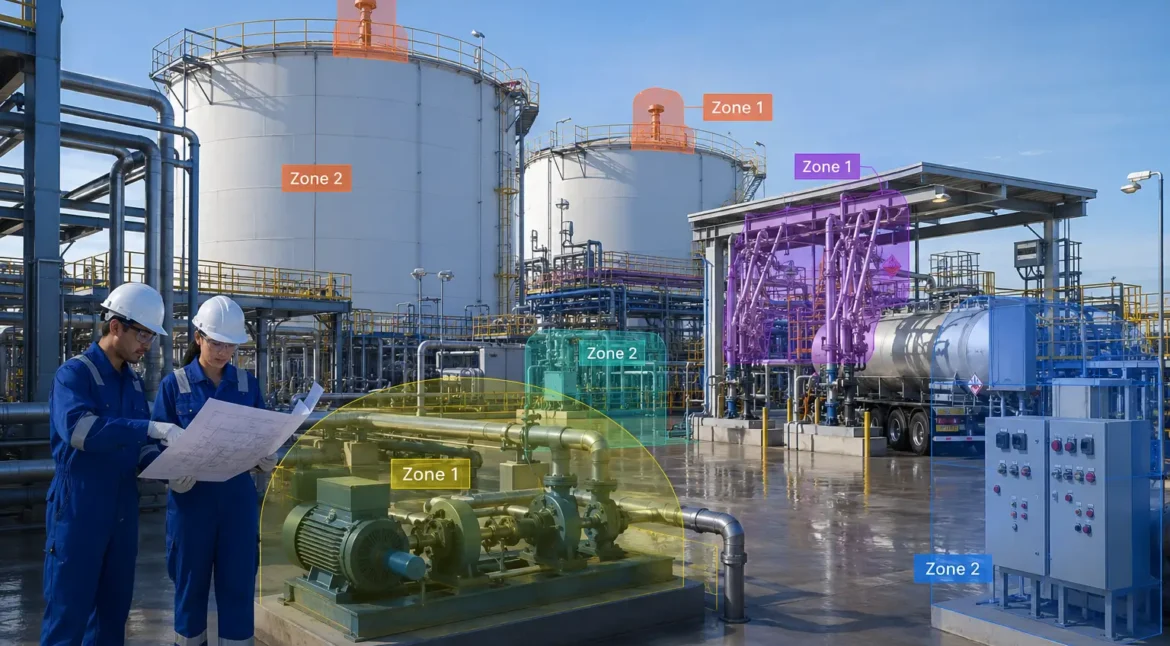
Hazardous Area Classification (HAC) is one of the most important engineering studies for industries handling flammable gases, vapours, mists, or combustible dusts. By identifying locations where explosive atmospheres may occur, Hazardous Area Classification helps engineers select appropriate equipment, implement effective ignition source controls, and design safer industrial facilities. Whether in…
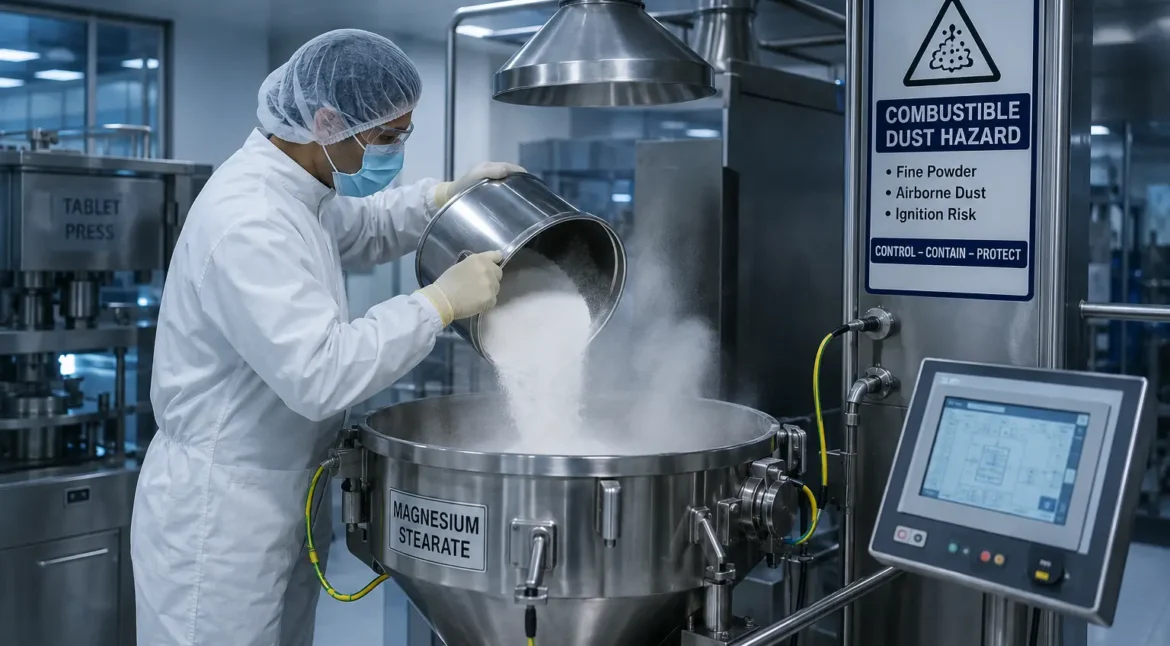
Magnesium Stearate Dust Explosion is a topic that receives far less attention than it deserves in pharmaceutical manufacturing. Magnesium Stearate is one of the most widely used excipients, commonly added as a lubricant during tablet compression and capsule production to reduce friction, improve powder flow, and prevent materials from sticking…
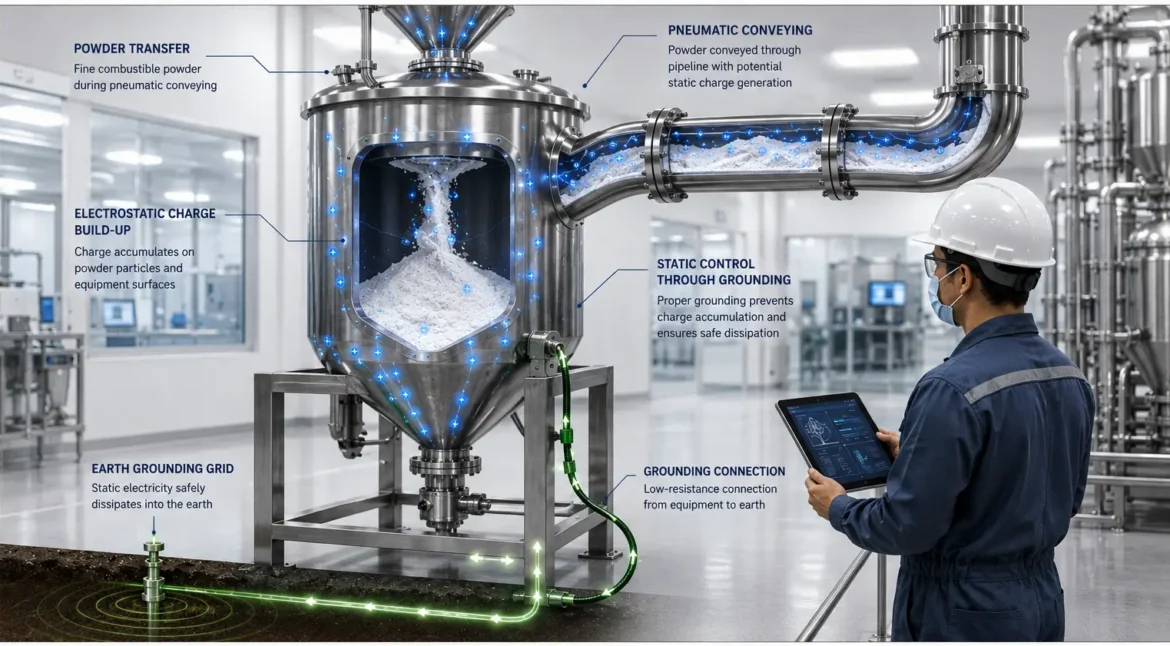
Powder handling is a routine operation across industries such as pharmaceuticals, chemicals, food processing, agriculture, metals, plastics, and battery manufacturing. Whether powders are being transferred, mixed, conveyed, milled, or packaged, these processes can generate significant electrostatic charges through normal material movement. Under the right conditions, accumulated static electricity can become…
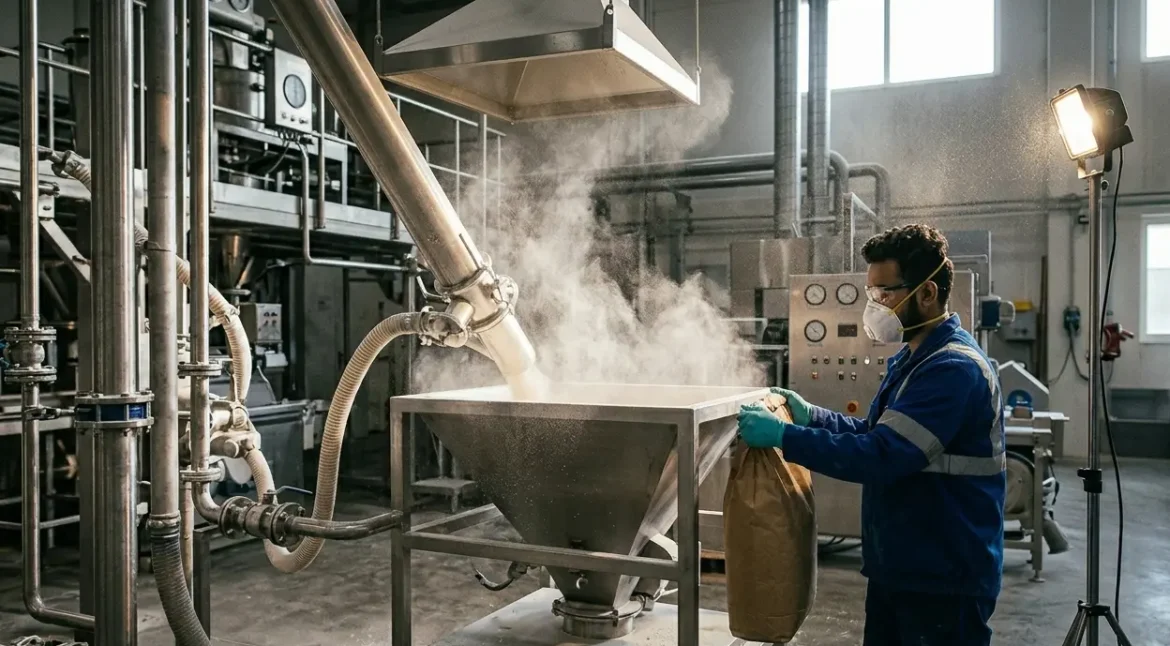
Why Particle Size Matters in Hazardous Area Classification Hazardous area classification is a critical process for identifying locations where combustible dust atmospheres may create explosion risks. In industries handling powders, fine particulate materials, and dust-generating operations such as grinding, milling, conveying, mixing, and packaging, particle size plays a major role…