


A chemical plant safety audit helps evaluate whether a facility has identified its process hazards, implemented appropriate safeguards and maintained the documentation needed to demonstrate compliance with applicable requirements. In India, preparing for an audit may involve reviewing engineering drawings, HAZOP and risk assessment reports, pressure equipment inspection records, hazardous area classification documents and emergency preparedness records.
For chemical manufacturing facilities handling flammable, toxic, reactive or otherwise hazardous substances, accurate and up-to-date documentation is essential for demonstrating how risks are assessed, safeguards are maintained and emergency arrangements are managed.
Occupational health and safety audits may refer to IS 14489:2018, Occupational Health and Safety Audit — Code of Practice, alongside applicable legislation, state rules and relevant technical standards. For facilities covered by the Manufacture, Storage and Import of Hazardous Chemicals (MSIHC) Rules, 1989, the applicable requirements also govern relevant safety reports, emergency planning and other compliance obligations. Government guidance on chemical safety audits has also referenced IS 14489:2018.
The documents required for a chemical plant safety audit depend on the facility’s activities, the hazardous chemicals and quantities involved, its regulatory classification, applicable state rules and the scope of the audit. The following five categories provide a practical starting point for preparing the relevant records.
The following five document categories provide a practical starting point for preparing a chemical plant for a safety audit.
1. Updated Process Drawings, P&IDs and Management of Change Records
Process drawings provide the technical reference against which an auditor can understand the plant’s configuration, operating systems and safety-related equipment.
For facilities where piping and instrumentation diagrams (P&IDs) are relevant, the drawings should reflect the installed arrangement and incorporate approved modifications.
What should the documentation include?

Depending on the process and audit scope, the document set may include:
- Current P&IDs: Drawings showing process piping, equipment, instruments, control valves, isolation arrangements and relevant safety devices.
- Process flow diagrams (PFDs): Documents describing the principal process streams, equipment and operating relationships.
- Cause-and-effect matrices: Documents defining the relationship between initiating conditions, alarms, trips, interlocks and associated actions, where applicable.
- Emergency shutdown documentation: Relevant shutdown logic, isolation arrangements and safety-system interfaces.
- Drawing revision register: Revision numbers, dates, approval records and details of superseded drawings.
- Management of Change (MOC) records: Documentation of changes to equipment, process conditions, materials, instrumentation or operating procedures, including required reviews and updates.
The exact drawing package will vary according to the facility’s engineering design and the audit’s scope.
What might an auditor verify?
An auditor may compare selected drawings with the actual plant arrangement to determine whether important equipment and safeguards are represented correctly.
Typical discrepancies include:
- Field modifications that have not been incorporated into the latest drawings.
- Inconsistencies between instrument tag numbers and installed equipment.
- Changes to process lines or isolation arrangements without adequate review records.
- Safety interlocks or shutdown functions whose documentation does not match their implemented configuration.
- Superseded drawings remaining in operational use.
How should the plant prepare?
Maintain a controlled set of current drawings, make revision status easy to verify and ensure that modifications are reviewed, approved and documented through the applicable change-management process.
Where a discrepancy is identified, record the issue, assess its safety implications and document the corrective action. An updated drawing alone does not establish that an underlying engineering or operational risk has been resolved.
2. Process Hazard Analysis, HAZOP Reports and Risk Assessment Records
Process hazard analysis and risk assessment records help demonstrate how a facility identifies hazardous scenarios, evaluates potential consequences and determines the measures required to control risk.
Depending on the process, these assessments may include Hazard and Operability Studies (HAZOP), Quantitative Risk Assessment (QRA), Layer of Protection Analysis (LOPA) and other suitable hazard identification or risk evaluation methods.
These studies are not automatically mandatory in the same form or at the same interval for every chemical plant. Their applicability should be determined from the relevant regulatory provisions, facility classification, applicable standards and identified process risks.
What should the documentation include?
Where these assessments are applicable, the audit-ready records may include:
- HAZOP reports: Study scope, process nodes, design intent, deviations, causes, consequences, safeguards and recommendations.
- Risk assessment reports: Identified hazardous scenarios, risk evaluation methodology, assumptions and proposed risk-reduction measures.
- QRA reports, where applicable: Scenario frequencies, consequence modelling, individual risk estimates and societal risk results where relevant to the study.
- LOPA records, where applicable: Initiating events, enabling conditions, independent protection layers and the basis for risk-reduction decisions.
- Action tracking registers: Recommendation references, assigned responsibilities, target dates, implementation evidence and closure status.
- Study review records: Evidence that assessments have been reconsidered when significant changes or other review triggers arise.
What might an auditor verify?
The review may examine whether the assessment adequately represents the actual facility and whether identified recommendations have been addressed.
Potential findings include:
- Important process units or operating scenarios omitted from the study scope.
- Recommendations remaining open without a documented risk assessment or effective interim controls.
- Changes to chemicals, process conditions or equipment that have not been evaluated for their impact on the original assessment.
- Risk calculations based on assumptions that no longer represent actual plant conditions.
- Recommendations marked as closed without sufficient supporting evidence.
For example, a change in solvent composition may affect flammability characteristics, while a change in operating temperature or pressure may alter the consequences of a process deviation. Such changes should be assessed for their implications for existing safeguards and risk assessments.
How should the plant prepare?
Maintain the approved study reports alongside an up-to-date action tracker. Ensure that the status of significant recommendations can be demonstrated through engineering records, inspection evidence, revised procedures or other appropriate documentation.
Review intervals should follow the applicable requirements and the facility’s risk-based review arrangements. A universal five-year validity period should not be assumed for every HAZOP or QRA study.
3. Pressure Equipment Inspection and Pressure Relief Device Records

Chemical plants frequently use reactors, heat exchangers, pressure vessels, compressed gas receivers and other equipment that operates under pressure.
The inspection and testing requirements depend on the type of equipment, its service, applicable statutory provisions and relevant technical standards. Certain vessels may fall under specific pressure-vessel provisions, while others may be governed by different equipment-specific requirements.
What should the documentation include?
As applicable to the equipment and governing requirements, the records may include:
- Pressure vessel examination reports: Reports prepared by the appropriately qualified or authorised examiner, including findings and examination dates.
- Prescribed inspection forms and certificates: The applicable forms under the governing rules. For example, Form 8 is used for pressure-vessel examination under Rule 56 of the Delhi Factories Rules; this should not be assumed to be the correct form for every state or facility.
- Thickness measurement records: Ultrasonic thickness measurement (UTM) results, inspection locations, historical measurements and relevant corrosion assessments.
- Pressure relief device records: Identification details, set-pressure information, testing or calibration reports and maintenance history.
- Corrective maintenance records: Evidence of repairs, replacement, examination and return-to-service checks, where relevant.
- Equipment registers: Equipment identification, design data, applicable inspection requirements and due dates.
The applicable testing method and frequency must be established from the relevant statutory requirements, equipment design and service conditions. Fixed inspection intervals should not be applied indiscriminately to every vessel.
What might an auditor verify?
An auditor may check whether the required examinations and tests have been completed, whether significant findings have been addressed and whether the records correspond to the installed equipment.
Examples of potential discrepancies include:
- Inspection certificates that have expired or cannot be linked to the equipment concerned.
- Missing inspection history or inadequate records of identified defects.
- Thickness measurements indicating deterioration without a documented engineering assessment.
- Pressure relief devices with test results inconsistent with the approved design or specified set pressure.
- Equipment returned to service without evidence that required corrective work and checks were completed.
How should the plant prepare?
Maintain equipment-wise inspection dossiers, track upcoming inspection dates and retain supporting reports in a readily accessible format.
For pressure safety valves and other pressure relief devices, verify the applicable design basis and testing criteria before determining whether a recorded result is acceptable. Do not rely solely on a physical calibration tag as proof of compliance; the supporting test report and equipment identification must also be consistent.
4. Hazardous Area Classification Drawings and Electrical Equipment Records
Chemical plants handling flammable gases, vapours or combustible dusts may contain areas where an explosive atmosphere can occur.
Hazardous Area Classification (HAC) identifies and classifies locations according to the likelihood and duration of an explosive atmosphere, using the applicable classification system and technical criteria.
The resulting classification informs the selection, installation, inspection and maintenance of electrical equipment and other equipment that may present an ignition source.
What should the documentation include?
Depending on the substances handled and the applicable standards, the records may include:
- HAC drawings: Classified area boundaries, relevant equipment locations and the dimensions or elevations needed to interpret the classification.
- Hazardous substance data: Relevant flammability properties, gas or vapour characteristics and other information used to establish the classification.
- Equipment register: Equipment identification, installation location and the suitability of its protection concept for the classified area.
- Certification and marking records: Applicable explosion-protection certification, equipment group, temperature classification and other required markings.
- Inspection and maintenance records: Examination findings, defects, corrective actions and relevant inspection history.
- Change records: Evidence that changes to process materials, equipment or operating arrangements have been evaluated for their effect on area classification.
Relevant Indian and international technical references may include IS 5572 and the applicable parts of the IEC 60079 series. The applicable Central Electricity Authority safety regulations should also be considered where relevant.
Equipment certification requirements must be determined for the specific equipment, protection concept and legal framework. A particular certificate or approval should not be described as universally required for every item of equipment.
What might an auditor verify?
The review may focus on whether the installed equipment is suitable for its classified location and whether the documentation reflects actual conditions.
Examples of potential discrepancies include:
- Equipment installed outside the limits of its applicable protection rating.
- Incorrect or incomplete equipment markings.
- Cable entries, glands or enclosures that do not maintain the required protection.
- Missing inspection records for equipment in hazardous locations.
- Changes to the substances handled or the process configuration that have not been evaluated for their effect on the HAC.
For example, hydrogen service can require equipment suitable for Gas Group IIC under the relevant IEC gas-classification system. An item suitable only for a less demanding gas group must not be assumed suitable for hydrogen service.
Similarly, dust hazardous-area classification requires consideration of the relevant combustible-dust characteristics and the applicable dust-zone classification system.
How should the plant prepare?
Keep the classification drawings, equipment register and inspection records aligned. When process conditions or hazardous materials change, arrange an appropriate technical review to determine whether the existing classification and equipment selection remain suitable.
The review frequency should be based on applicable requirements, equipment condition, the nature of the installation and changes that could affect the hazardous area.
5. On-Site Emergency Plan and Mock Drill Records
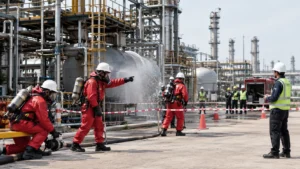
An emergency plan establishes how a facility will respond to an incident that threatens employees, equipment, the environment or surrounding communities.
For facilities covered by the Manufacture, Storage and Import of Hazardous Chemicals Rules, 1989, Rule 13 addresses the preparation and maintenance of the on-site emergency plan. It also requires the occupier to ensure that a mock drill is conducted every six months and that a detailed report is made immediately available to the concerned authority.
Separately, Section 41B(4) of the Factories Act, 1948 historically addressed approval of an on-site emergency plan for factories involving hazardous processes. The Occupational Safety, Health and Working Conditions Code, 2020 came into force on 21 November 2025 and repealed the Factories Act subject to its repeal-and-savings provisions. Consequently, current compliance should be checked against the applicable Code, rules, saved provisions and other relevant regulations rather than relying on the old Act alone.
What should the documentation include?
As applicable to the facility, the emergency preparedness dossier may include:
- On-site emergency plan: Defined response arrangements, responsibilities, emergency organisation and procedures for relevant accident scenarios.
- Emergency contact register: Current contact information for internal response teams, emergency services, hospitals and relevant external agencies.
- Scenario-specific procedures: Instructions for responding to credible emergencies such as chemical releases, fires, explosions or loss of containment.
- Training and briefing records: Evidence that personnel have been informed of the emergency arrangements relevant to their roles.
- Mock drill reports: Drill date, scenario, participating teams, observations, response performance and identified deficiencies.
- Corrective action records: Assigned responsibilities, completion status and verification of improvements arising from drills or actual incidents.
- External coordination records: Relevant communication and coordination arrangements with the appropriate authorities and neighbouring facilities.
What might an auditor verify?
An auditor may assess whether the emergency arrangements are suitable for the hazards present and whether the documented plan is understood and practicable.
Potential findings include:
- Emergency contacts that are no longer valid.
- Procedures that do not reflect current plant layouts or process conditions.
- Drill reports that record participation but do not evaluate the response.
- Repeated deficiencies without documented corrective action.
- Inadequate coordination arrangements for scenarios that may affect areas outside the facility.
How should the plant prepare?
Keep the plan current, communicate relevant responsibilities to personnel and conduct drills at the applicable statutory intervals. Use drill findings to improve the plan, response procedures, training and emergency resources.
For facilities covered by MSIHC Rule 13(4), the six-month mock drill interval must be observed. Additional or different requirements may apply under other sector-specific regulations.
Chemical Plant Safety Audit: Quick-Reference Checklist
The following table summarises the five document categories and the principal checks that can help prepare a facility for an audit.
| Document category | Key checks | When to review |
|---|---|---|
| Process drawings and MOC records | Current revisions, field accuracy and documented changes | Following relevant modifications and through drawing-control reviews |
| HAZOP and risk assessment records | Study scope, assumptions, recommendations and closure evidence | At applicable review intervals and when material changes or other review triggers arise |
| Pressure equipment and relief device records | Applicable certificates, examination findings, testing records and due dates | According to statutory requirements and equipment-specific inspection schedules |
| HAC and electrical equipment records | Correct classification, equipment suitability, inspection findings and changes | As required by applicable standards and following relevant changes |
| Emergency plans and drill records | Current procedures, contact details, drill reports and corrective actions | At applicable review intervals and after relevant changes or exercises |
Important: This is a practical preparation checklist, not a substitute for a facility-specific statutory compliance register. The exact documents, forms, approval requirements and inspection intervals must be verified against the legislation and technical standards applicable to the facility.
How to Improve Chemical Plant Safety Audit Readiness
Preparing for a safety audit should be an ongoing activity rather than a last-minute exercise.
A systematic approach can help a facility identify gaps before the audit and improve the reliability of its safety documentation.
1. Establish a controlled document register
List the applicable drawings, studies, inspection certificates, registers, procedures and emergency records. Record the document owner, revision status, approval status and next review or inspection date wherever relevant.
2. Verify documentation against actual site conditions
Check whether drawings, equipment registers and procedures accurately reflect the installed plant and current operating arrangements. Record discrepancies and assign responsibility for their resolution.
3. Track findings to verified closure
Maintain a central register for audit observations, HAZOP recommendations, inspection findings and emergency drill actions. Define responsibilities and due dates, document corrective measures and verify closure before marking an item complete.
4. Review changes that could affect safety
Changes to chemicals, equipment, process conditions, control systems or operating procedures may affect existing risk assessments and safeguards. Use the applicable Management of Change process to identify which documents and technical reviews need updating.
5. Obtain specialist support where necessary
Where the facility requires technical assessment or independent verification, appropriately qualified specialists can help review the documentation, identify gaps and evaluate whether the available evidence supports the required safety and compliance objectives.
For chemical facilities subject to specific statutory audit requirements, confirm the applicable auditor eligibility, accreditation and approval conditions before appointing an external agency.
How INDSAFE Can Support Industrial Safety and Compliance
INDSAFE supports industrial facilities through occupational health and safety audits, process safety assessments and engineering-led compliance services.
Depending on the facility’s requirements, support may include:
- Occupational health and safety audits with reference to IS 14489 and applicable requirements.
- MSIHC compliance reviews and related safety documentation.
- HAZOP and Quantitative Risk Assessment.
- Hazardous Area Classification and explosion-risk assessments.
- Review of safety documentation, identified gaps and corrective action plans.
- Emergency preparedness and related process safety support.
The scope of work should be defined according to the facility’s hazards, applicable statutory requirements and the specific objectives of the engagement. Where an assignment requires a particular accreditation or statutory authorisation, the relevant eligibility requirements should be confirmed before the work is undertaken.
Preparing for an upcoming chemical plant safety audit?
Contact INDSAFE to discuss your facility’s safety audit and compliance requirements.
Request a consultation: indsafe.in/contactus/
Frequently Asked Questions
1. Which documents should a chemical plant prepare for a safety audit?
Commonly reviewed documents include current process drawings, applicable hazard and risk assessment reports, pressure equipment inspection records, hazardous area classification and electrical equipment records, and emergency plans with drill documentation. The exact requirements depend on the facility and the applicable regulations.
2. Is IS 14489 mandatory for every chemical plant?
IS 14489:2018 is a code of practice for occupational health and safety audits. Whether an audit is required, which criteria apply and who is eligible to conduct it depend on the relevant statutory provisions, regulatory directions, audit scope and applicable requirements. It should not be treated as a standalone law imposing identical obligations on every chemical plant.
3. How frequently should a HAZOP study be reviewed?
There is no single review interval that can safely be assumed to apply to every HAZOP study. The facility should follow applicable statutory and technical requirements and establish suitable review arrangements based on process risk, changes to the plant and other relevant review triggers.
4. How often must an on-site emergency plan mock drill be conducted?
Under Rule 13(4) of the MSIHC Rules, 1989, an occupier covered by that provision must ensure that an on-site emergency-plan mock drill is conducted every six months. The detailed report must be made immediately available to the concerned authority under Rule 13(5). Additional requirements may apply under other regulations.
5. Are pressure vessel inspection forms the same across all Indian states?
Not necessarily. Prescribed forms, examination procedures and intervals may differ under the applicable state rules and other equipment-specific regulations. Facilities should verify the correct requirements for their jurisdiction and equipment rather than applying a form or interval from another state without checking its applicability.
6. What happens if a chemical plant has incomplete safety documentation?
Incomplete or inconsistent records may lead to audit observations, requests for additional evidence, corrective actions or regulatory consequences, depending on the nature of the deficiency and the applicable law. Missing paperwork does not automatically establish that a physical safeguard is absent, but the facility must be able to demonstrate compliance and the effective implementation of its safety arrangements.
Conclusion
A well-prepared chemical plant safety audit begins with reliable documentation, but it does not end there. Drawings must reflect the installed plant, risk assessment recommendations must be addressed, equipment inspections must be appropriately documented, hazardous-area equipment must be suitable for its location, and emergency arrangements must be maintained and tested.
By treating safety records as part of the facility’s ongoing safety management system, chemical manufacturers can improve audit readiness, identify gaps earlier and strengthen the evidence supporting their safety and compliance arrangements.